Espresso basics · 6 min read
Pressurized vs Non-Pressurized Espresso Baskets
Compare pressurized and non-pressurized espresso baskets. Learn single-wall vs dual-wall differences, grinder needs and what to check before switching.

By Marvin Smit
Published · Updated
On this page
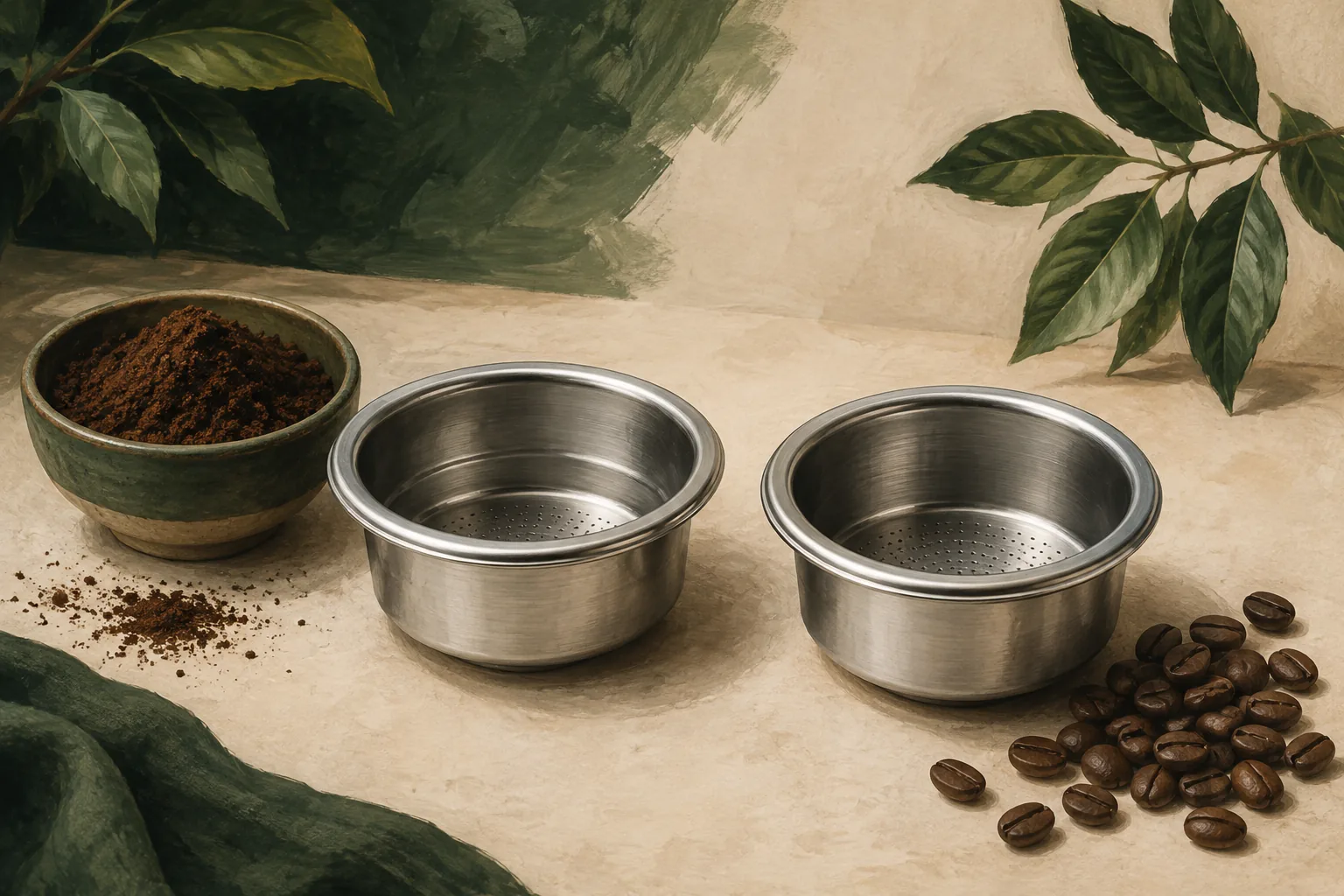
Two baskets that fit the same portafilter can ask very different things of your grinder. Choosing the right one is a workflow decision: do you want to use pre-ground coffee conveniently, or adjust freshly ground beans shot by shot? Before buying a replacement, check whether you need a separate espresso grinder for the workflow you want.
Research-based guidance; we do not claim hands-on testing. Section images are AI-generated editorial illustrations. Our buying guides may contain affiliate links. Read our disclosure and research approach.
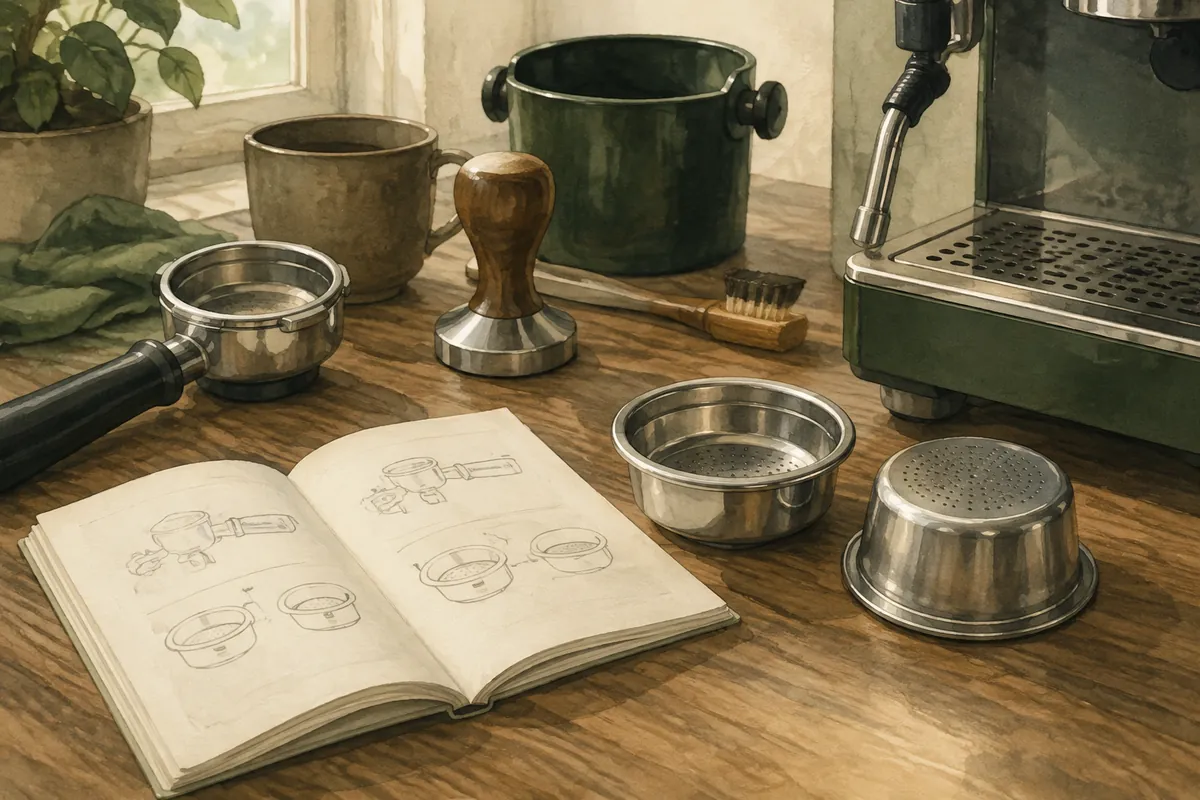
Identify the basket using the manual
A common dual-wall design has many holes inside and a restricted exit underneath. A single-wall basket has perforations through one layer. However, pressurization can also involve a separate component, so appearance alone is not a universal identification method. Check the diagram for your exact model.
Do not confuse the number of walls with the number of servings. A ‘single’ or ‘double’ shot basket describes capacity; ‘single-wall’ or ‘dual-wall’ describes construction. A double-shot basket can be either type.
Single-wall design
Perforations through one floor; the prepared grounds provide resistance.
Common dual-wall design
Perforations inside; an additional restricted exit beneath.
Simplified cross-sections, not to scale. Some pressurized systems use another component. Confirm your exact arrangement in the manual.
Read basket labels without buying the wrong part
A listing may describe serving size, basket construction and the portafilter holder in one sentence. Separate those details before ordering. ‘Double’ does not establish the number of walls, and ‘bottomless’ describes the holder rather than guaranteeing that the whole setup suits your machine.
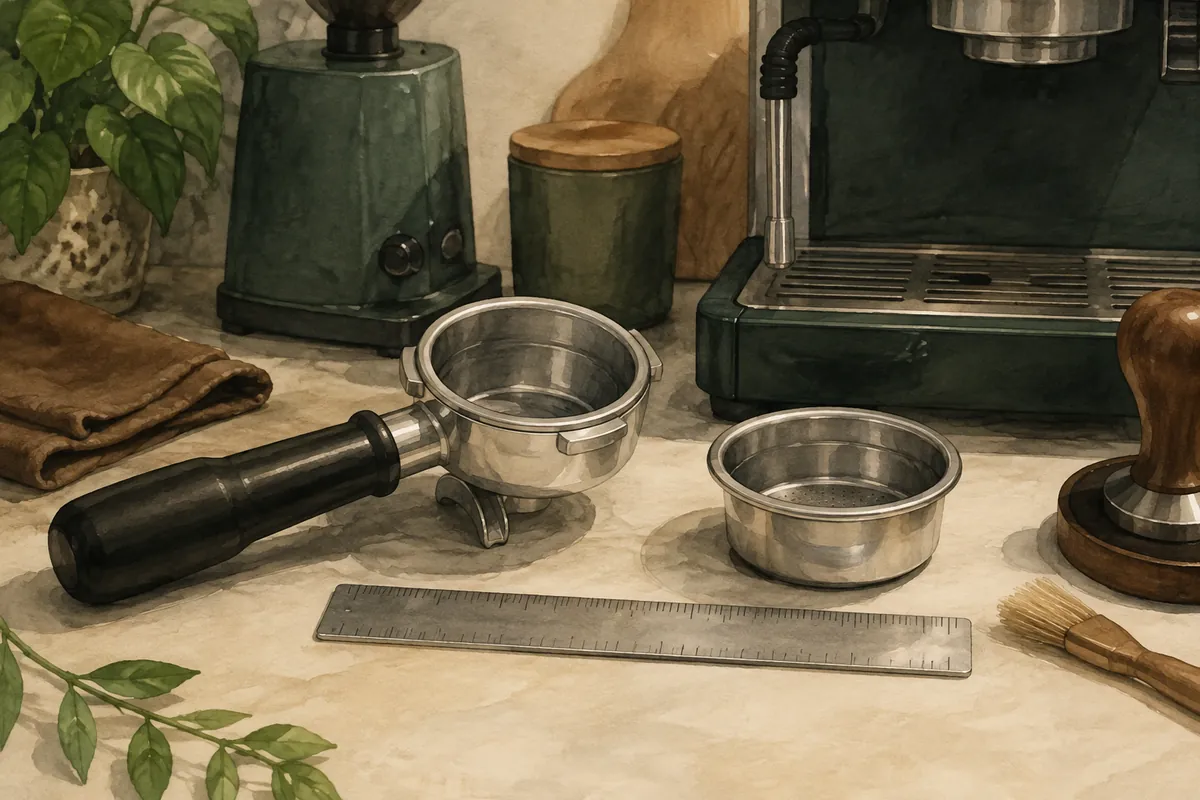
Write down the exact machine model and the part you are replacing. Compare the manufacturer's basket and holder information, including capacity and any required outlet component. If a listing supplies only a diameter and a long compatibility claim, that is not enough information to resolve an uncertain fit.
Then check the workflow. If you intend to use single-wall with freshly ground beans, the question is whether you have usable espresso grind control. A basket purchase alone does not provide that control. Keeping a compatible pressurized setup for pre-ground coffee can be a deliberate convenience choice.
| Label | What it describes | Still check |
|---|---|---|
| Single / double shot | Serving capacity | Recommended dose for that basket |
| Single / dual wall | Basket construction | Complete compatible pressurization system |
| Bottomless / spouted | Portafilter holder | Basket fit and machine compatibility |
Choose the workflow you can support
Use this comparison as a shopping and setup checklist. Neither basket removes the need to follow the machine’s dose and cleaning instructions.
| Your situation | Practical starting choice |
|---|---|
| You buy coffee already ground | The machine’s compatible pressurized system. |
| You have a grinder with fine espresso adjustments | A compatible single-wall basket if you want to dial in. |
| You want to learn recipe adjustments | Single-wall, with a scale and repeatable preparation. |
| You want to keep your present routine simple | Keep the working basket until you can name a limitation. |
Before switching, check the whole fit
Diameter is only one part of compatibility. Basket depth, the portafilter interior and any required pressurization component also matter. Search the manufacturer’s parts information for your model instead of assuming that every basket with the same advertised diameter fits.
A useful example is the Gaggia Classic E24 pressurized arrangement: its instructions specify the associated component, rather than treating the basket as an interchangeable standalone shortcut. Follow the assembly instructions for your version; do not improvise a hybrid setup from unrelated parts.
- Confirm the machine and portafilter model.
- Check basket capacity and any required components in the manual.
- Make sure your grinder can support the intended single-wall workflow.
- Start a fresh recipe log after the switch; do not assume the old settings transfer.
Source: Gaggia Classic E24 USA manual
A basket change is not an automatic flavor upgrade
Single-wall brewing gives you more control, but control is useful only when you can make and repeat adjustments. If your current setup delivers coffee you enjoy, there is no requirement to change it. If you want to learn, budget time for several deliberate comparisons as well as any equipment purchase.
Write down what you hope to improve before ordering: more control over freshly ground coffee, a different dose, or a replacement for a damaged basket. ‘More crema’ on its own is not a useful success criterion. Judge the drink you actually make, including milk if that is how you normally enjoy it.
For an equipment decision, first read whether you need a separate espresso grinder. It separates the need for espresso-capable grinding from the choice to own a second appliance.
What actually creates resistance to flow?
In a single-wall setup, the prepared grounds play the central role in restricting water flow. A pressurized system adds an outlet restriction, reducing reliance on precisely prepared grounds. That explains the different workflow advice: a single-wall basket makes grind control particularly important, while a compatible pressurized setup offers a practical path for pre-ground coffee.
This distinction does not make tamping, dosing or cleanliness irrelevant in a pressurized system. Use the specified dose and preparation method. If coffee barely exits, stop and consult the troubleshooting and cleaning instructions rather than assuming that more pressure is desirable.
Do not modify the outlet, drill a basket or remove a component to imitate a different system. The useful choice is between compatible, correctly assembled setups. A machine’s advertised pump pressure is also not a basket-selection guide.
Source: Breville Bambino Plus manual: single-wall and dual-wall use
Your first single-wall shot: what to reset
Treat the switch as a new recipe. Keep the same beans for the first comparison, choose a dose that fits the new basket and record beverage weight. Do not judge the change by reproducing the same crema height or by reusing the old automatic button volume without checking it.
If the shot rushes through, follow the single-wall dial-in process and check whether the grinder can reach a suitable espresso setting. If it barely flows, work back toward a coarser setting within the grinder’s instructions. Keep dose and yield fixed during that comparison so you can interpret the result.
A useful first-session goal is a cup you can repeat. Leave accessory experiments until later: changing basket, grinder, dose and preparation tools together makes it difficult to tell which change matters. Keep your original compatible basket available if you want to return to pre-ground coffee.
Frequently asked questions
Is a bottomless portafilter non-pressurized?
Bottomless describes the portafilter holder having an open underside. Pressurization describes the basket or outlet system. Identify both parts and check their compatibility; the words do not describe the same feature.
Can I use fresh grounds in a pressurized basket?
Check your machine’s instructions. Freshness alone does not determine compatibility: grind, dose and the particular pressurized system also matter. Do not automatically transfer a very fine single-wall recipe.
Are double-shot and dual-wall baskets the same?
No. Double-shot refers to serving capacity; dual-wall refers to construction. A double-shot basket can be single-wall or dual-wall.
Can I use pre-ground coffee in a non-pressurized basket?
You cannot adjust the grind of coffee that is already ground. That makes dialing in a single-wall recipe less flexible. Use your machine’s compatible pressurized system when its instructions recommend it for pre-ground coffee.
Does more crema mean the basket makes better espresso?
Crema height alone does not tell you whether you will prefer the flavor. Compare the taste of the drink you usually make and whether you can repeat it. Do not switch basket systems only to imitate a photograph of a shot.
Keep learning