
Equipment decisions · 7 min read
Do You Need a Separate Espresso Grinder?
Do you need a separate espresso grinder? Compare built-in, manual and electric workflows, identify real limitations and decide whether to upgrade.

By Marvin Smit
Published · Updated
On this page
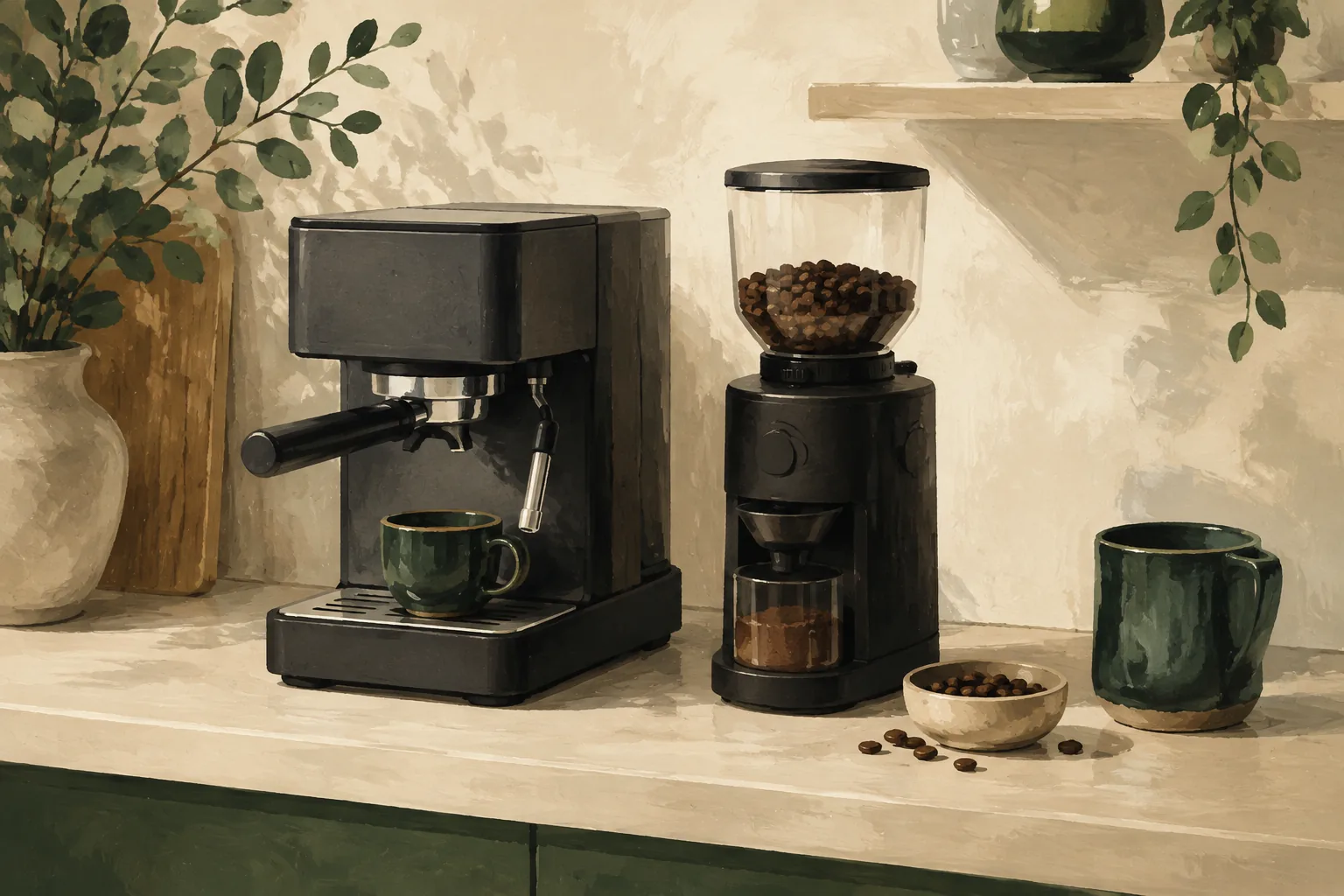
‘Do I need a grinder?’ and ‘Does it need to be separate?’ are different questions. Start with your basket and the coffee you use, then decide how much adjustment you want. Start with our basket identification guide if you are unsure what you have, then use the decisions below before shopping.
Research-based guidance; we do not claim hands-on testing. Section images are AI-generated editorial illustrations. Our buying guides may contain affiliate links. Read our disclosure and research approach.
A built-in grinder already counts
An integrated machine can provide both grinding and brewing in one appliance. The Breville Barista Express, for example, includes an adjustable conical burr grinder. Its integrated format does not by itself mean you need another grinder beside it.
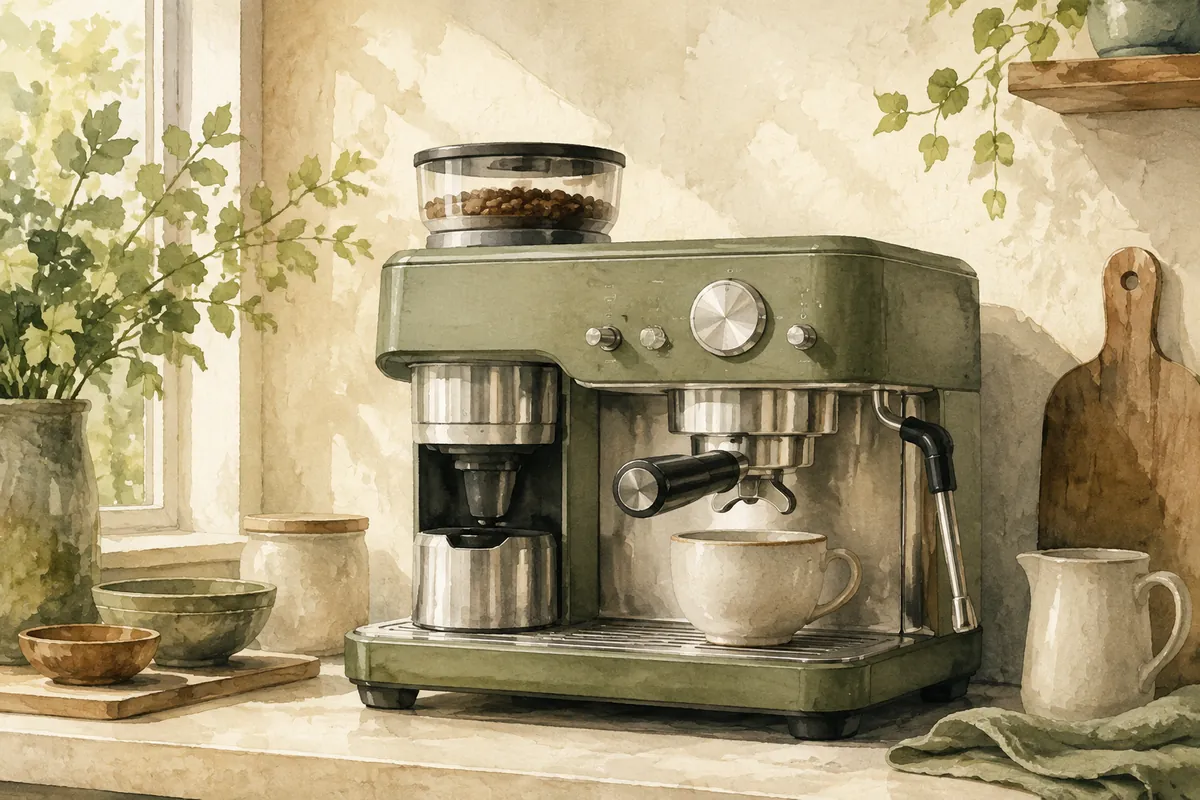
Evaluate what happens in your kitchen: can you find a usable setting for your beans, repeat your dose and make coffee you enjoy? If so, keep using that setup. Read the adjustment instructions before concluding that the grinder has reached its limit.
Choose by your current setup
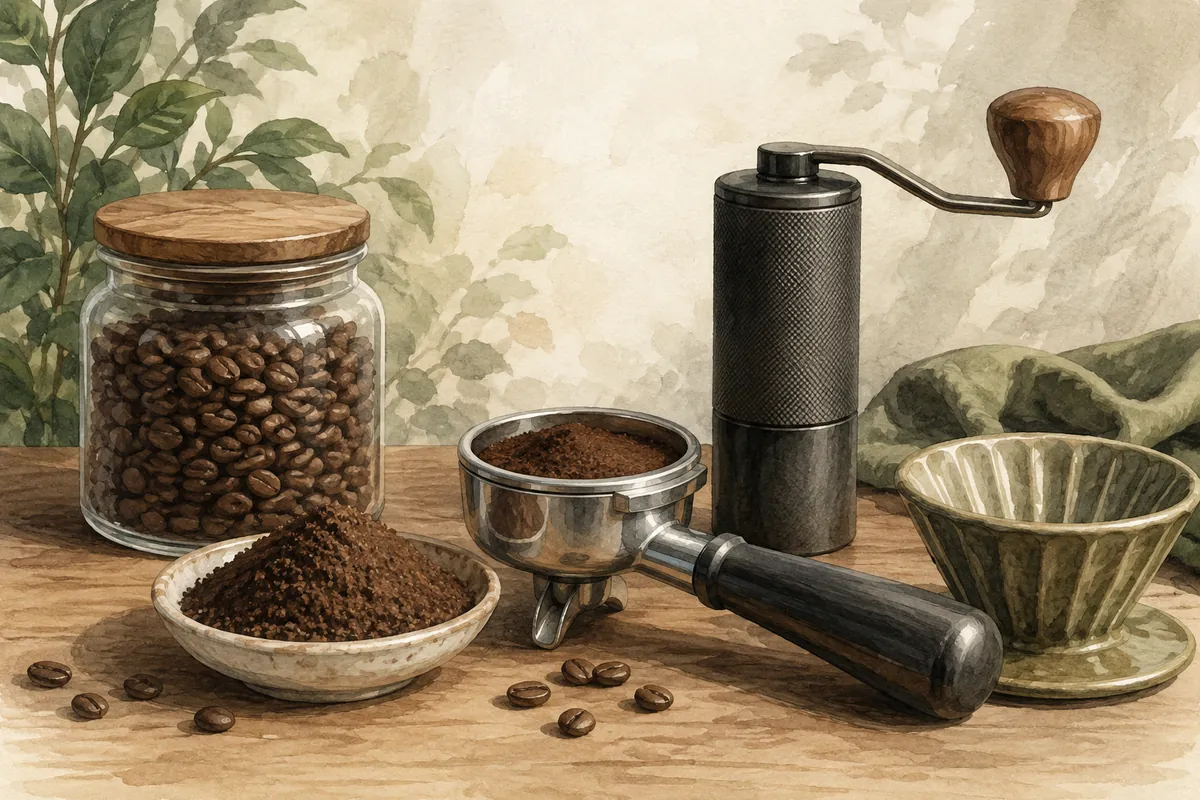
The following is our editorial decision framework. It does not rank grinder performance; it identifies which question to answer next.
| Current routine | Next decision |
|---|---|
| Pre-ground coffee and a pressurized basket | Keep it if it suits you; choose a new grinding workflow only if you want one. |
| Built-in grinder and enjoyable espresso | No separate purchase is needed just to complete the setup. |
| Single-wall basket without suitable grind control | Investigate an espresso-capable grinder before changing the machine. |
| Frequent switching between espresso and filter | Consider whether a dedicated setup would simplify your routine. |
| An adjustment limit you can reproduce | Compare grinders against that specific limitation. |
Switching brew methods is a workflow tradeoff
One grinder may cover more than one brew method, but returning to a setting and managing retained coffee are part of the routine. Follow model-specific guidance when making large adjustments; do not assume every grinder should be adjusted in the same way.
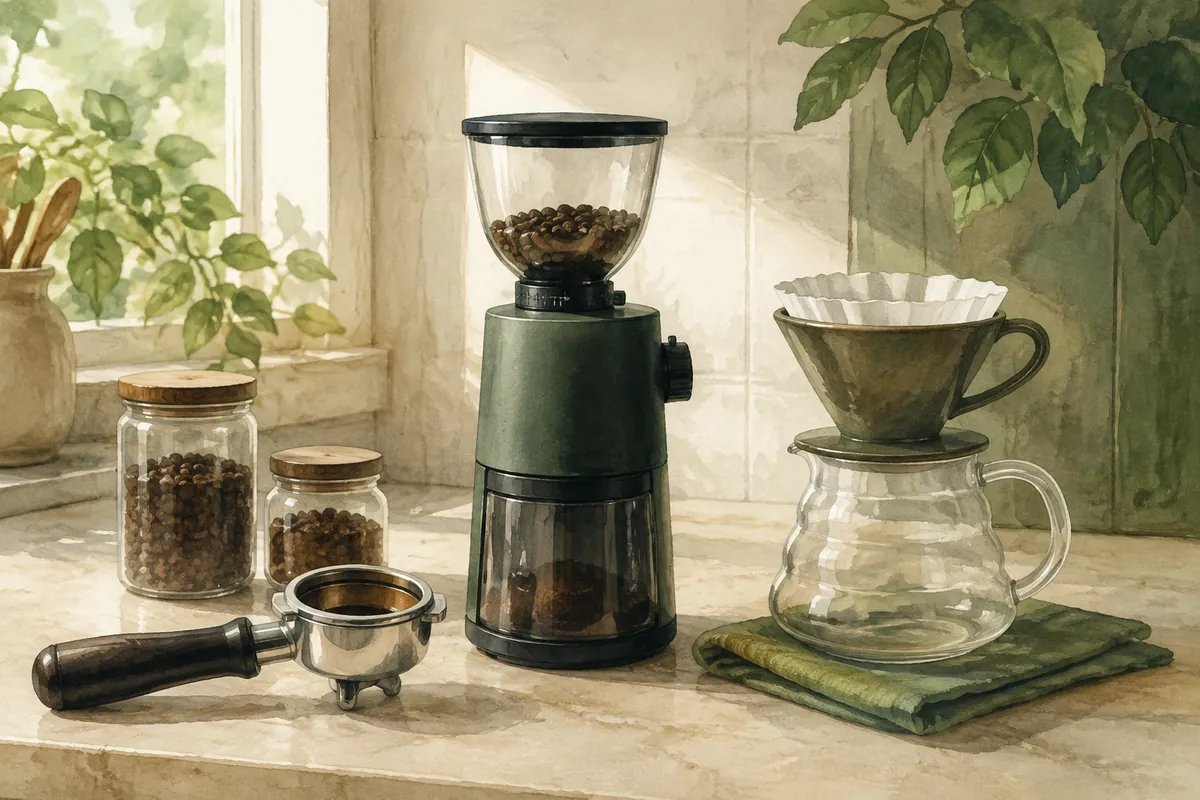
Before allocating counter space to a second unit, keep a week’s note of the actual annoyance. Is switching taking too long? Are you forgetting the espresso setting? Do two people want different beans at the same time? These are clearer reasons for a dedicated grinder than an abstract requirement to own separate equipment.
Write a short brief before shopping
List your basket type, usual drinks, available space and whether you also brew filter coffee. Decide whether manual grinding fits your morning routine. Include a scale in the workflow if you want to compare dose and yield consistently.
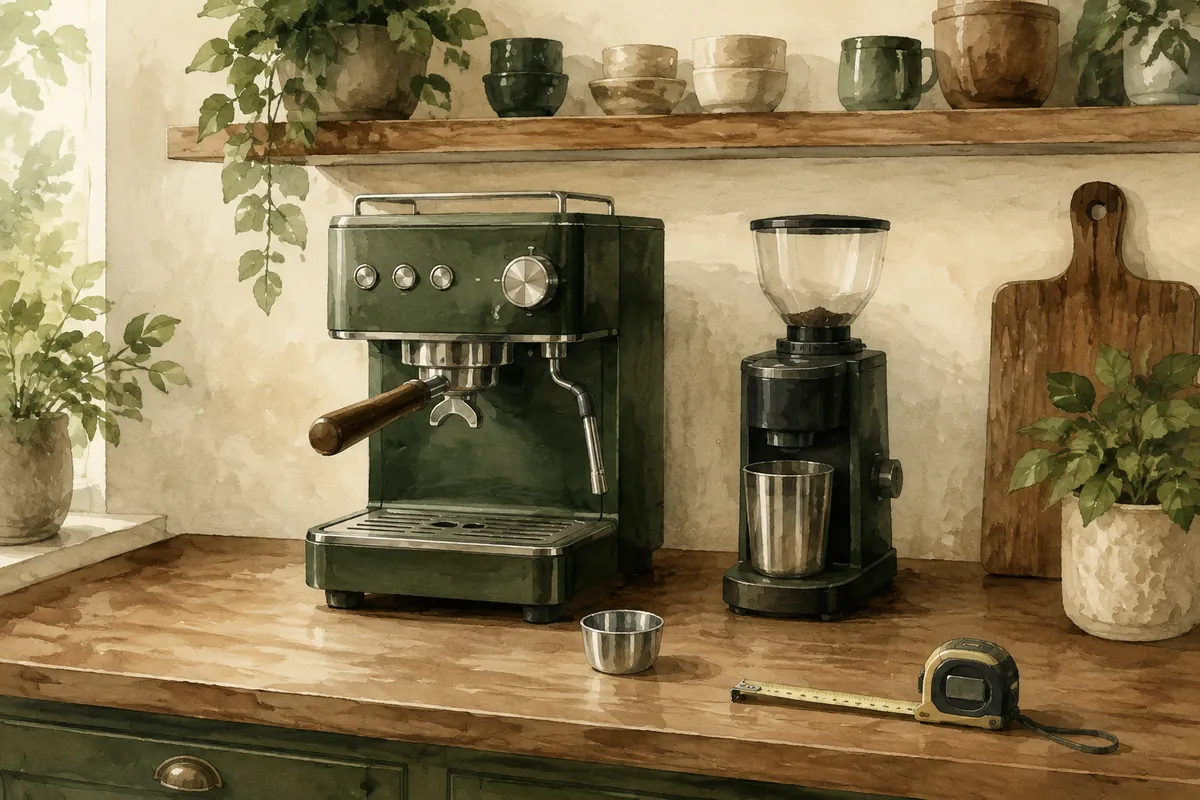
Then state the problem in one sentence: ‘I want finer control between the settings I currently use,’ or ‘I want to stop switching beans every morning.’ Use that sentence to judge a shortlist. A grinder that solves someone else’s problem may add little to your setup.
Our coffee grinder buying guide separates espresso, filter and mixed use so you can compare relevant options. If you are still unsure which basket you have, check our basket identification guide first. You may discover that your next useful step is learning the existing equipment, not buying another appliance.
What makes a grinder useful for espresso?
Look for usable fine adjustment for your basket and coffee, not simply the word ‘burr.’ For example, our Encore vs Encore ESP comparison explains the ESP’s separate espresso and filter adjustment ranges. That is a model-specific design feature; do not transfer its numbered settings to another grinder.
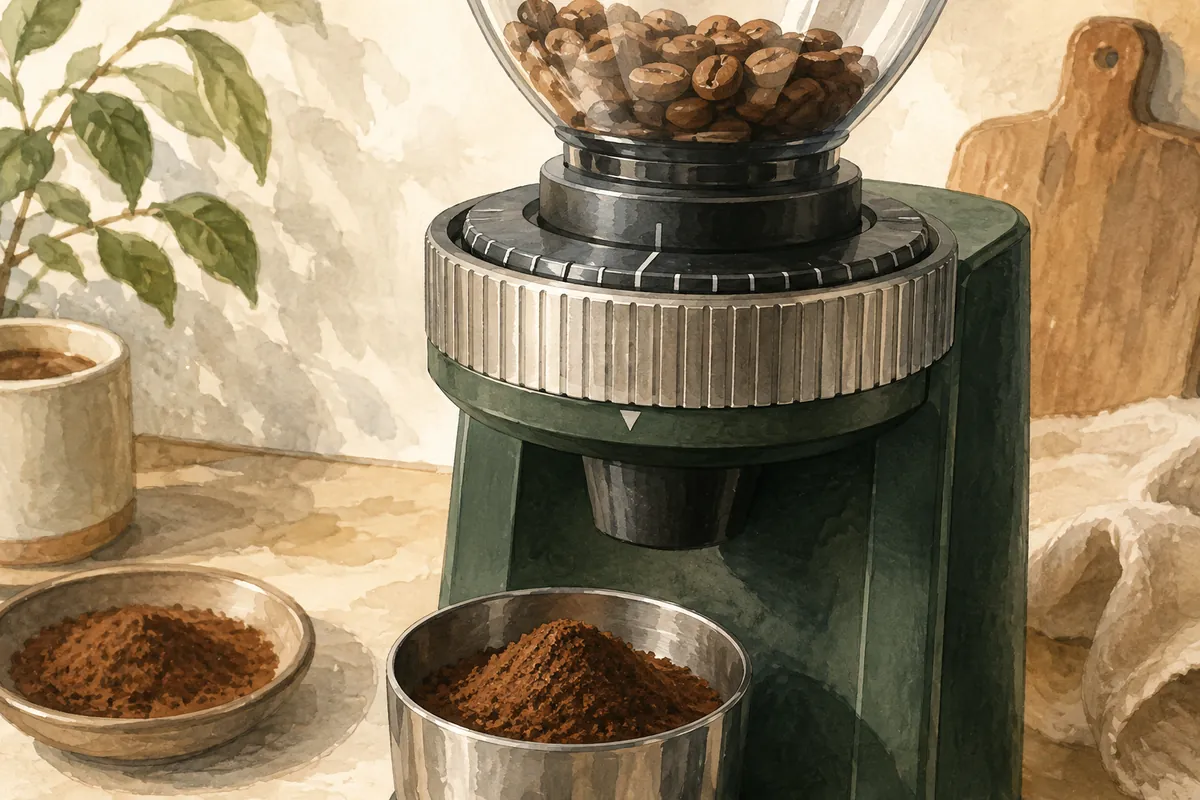
When comparing candidates, ask whether you can adjust near your working setting without jumping from very fast flow to almost no flow. Also consider whether you can repeat the output dose in your preferred routine. Neither a large hopper nor a long settings list answers those questions by itself.
Integrated appliance
Grind Brew
Evaluate its usable adjustment and repeatability.
Separate appliances
Grind
Brew
Evaluate the same controls, plus space and handling.
Appliance format is not a grind-quality score. Choose the arrangement that addresses your actual limitation.
Manual, electric or integrated: compare the daily routine
A manual grinder trades motorized convenience for a hand-powered routine. An electric separate grinder occupies its own space and outlet; an integrated grinder keeps the grinding and brewing functions in one appliance. Those are practical format differences, not a ranking of cup quality.
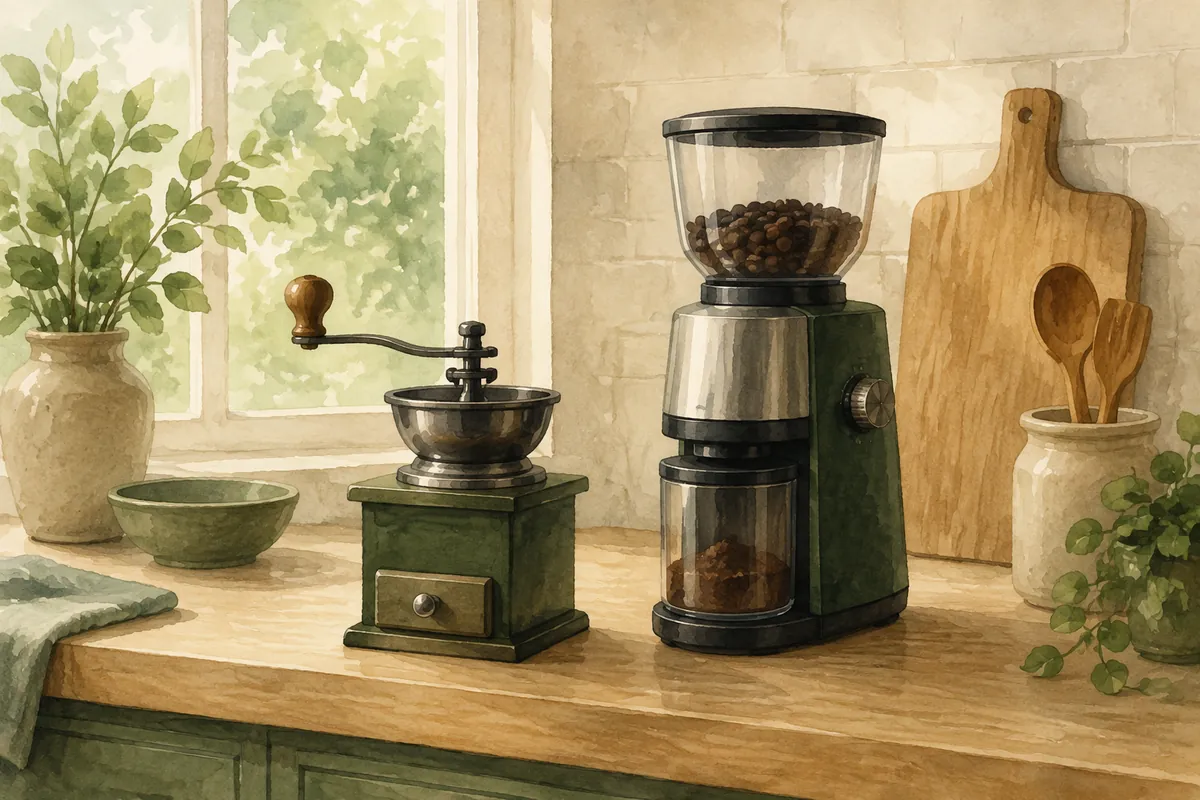
Before choosing, imagine your busiest morning. How many drinks do you make? Who changes the beans? Where will the scale and dosing cup sit? Measure the working space, including clearance to fill the hopper or operate a handle. A setup that fits only when packed away may be frustrating in daily use.
| Format | Question to answer before buying |
|---|---|
| Manual separate grinder | Will everyone using it accept hand grinding for the usual number of drinks? |
| Electric separate grinder | Is there usable counter space, power and access for refilling and cleaning? |
| Integrated grinder | Does its adjustment and bean-changing routine already meet your needs? |
Can you add a grinder and keep your current machine?
With a machine that lets you load a removable portafilter yourself, a separate grinder can be an addition to the workflow rather than a reason to replace the brewer. Check the machine’s instructions and basket requirements first. Do not assume that a bean-to-cup appliance accepts externally ground coffee in the same way; use only its documented input method.
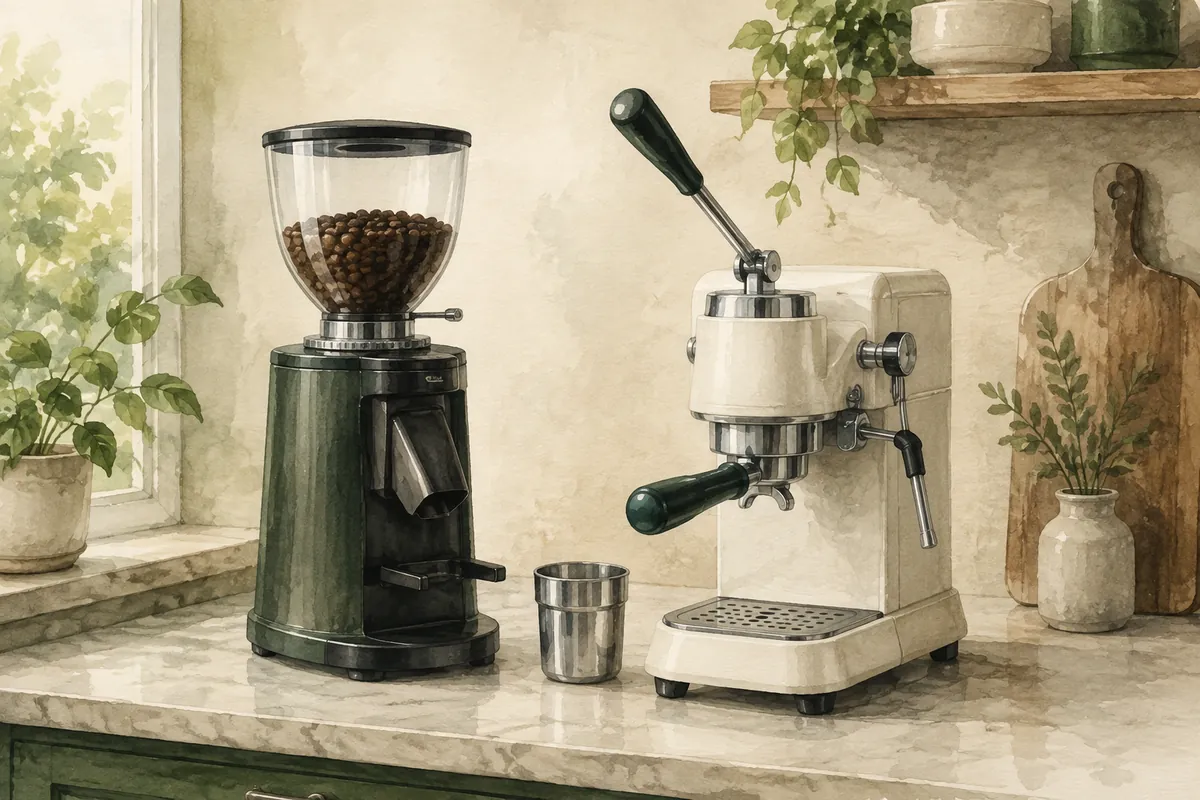
For an integrated manual machine such as the Barista Express, ask whether the built-in grinder is the actual limitation. If it already gives you repeatable coffee you enjoy, an extra appliance adds space and a separate cleaning routine without a clearly defined benefit.
If you have identified a limitation, write down what stays and what changes: current brewer, compatible basket, new grind routine and available counter space. Compare the whole arrangement with our compact espresso setup guide. Include room to refill beans, handle a dosing cup and move the water tank, rather than measuring only the closed appliances.
Source: Breville Barista Express: integrated grinding and removable portafilter
Three signs worth investigating before an upgrade
An upgrade brief is strongest when it describes a repeatable problem. Examples include adjustment steps that repeatedly miss your useful range, a switching routine you find cumbersome, or a household that wants separate beans ready at the same time. These justify research; they do not prove a particular new model will fix everything.
For each candidate, check the manual and available evidence against that problem. If a review only says the grinder is ‘premium,’ it has not answered your question. Keep a shortlist small enough to compare meaningfully, and include the option of keeping the current setup.
Frequently asked questions
Can a built-in grinder make good espresso?
A separate appliance is not a prerequisite. Evaluate whether the built-in grinder gives you useful adjustments and repeatable coffee you enjoy with your basket and beans.
Can one grinder handle espresso and filter coffee?
Some models support both, but check the adjustment range and the routine for switching back. Decide whether that routine fits your household before choosing a dedicated second grinder.
Should I buy a grinder before upgrading my machine?
Investigate the actual limitation first. If single-wall brewing is limited by grind control, address that before assuming the brewer is responsible. If grind control already works, another grinder may add little.
Do I need a grinder if I buy pre-ground espresso coffee?
Not necessarily for a compatible pressurized workflow. Check the basket guidance for your machine. If you want to dial in freshly ground coffee in a single-wall basket, suitable grind adjustment becomes part of the setup.
Is a separate grinder always better than a built-in grinder?
No. Separate describes the appliance format, not a measured level of grind quality. Compare adjustment control, repeatability and the routine you need; keeping a built-in grinder that works well for you is a valid choice.
Keep learning
- Identify pressurized and single-wall baskets
- Compare espresso, filter and mixed-use grinders
- See our espresso machine buying guide