Espresso basics · 7 min read
Espresso Brew Ratio Explained: 1:2 and Beyond
Understand espresso brew ratio with dose-and-yield examples. Compare 1:1.5, 1:2 and 1:3, calculate grams out and avoid common strength and dilution mistakes.

By Marvin Smit
Published · Updated
On this page
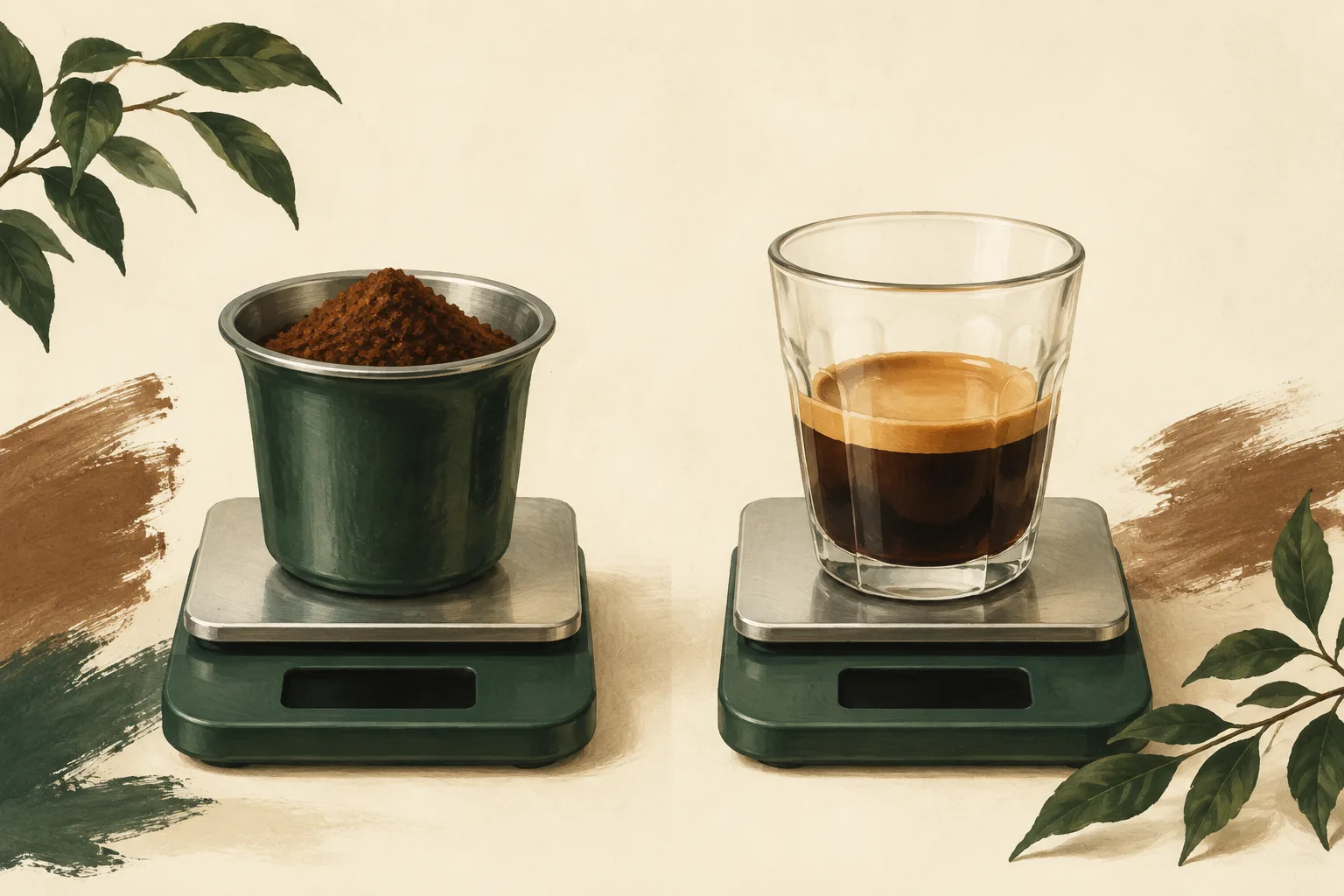
A ratio makes a recipe easier to understand and scale. It does not tell you whether the coffee tastes good, which grinder setting to use or exactly when to stop a timer. Treat it as a clear description of two weights. Our espresso dial-in workflow puts those measurements into a repeatable brewing routine.
Research-based guidance; we do not claim hands-on testing. Section images are AI-generated editorial illustrations. Our buying guides may contain affiliate links. Read our disclosure and research approach.
Calculate yield from your dose
For a ratio written as 1:x, multiply your dry dose by x to find the target beverage weight. To describe a shot you already made, divide beverage weight by dry dose. A 40 g shot from 16 g of coffee is therefore 1:2.5.
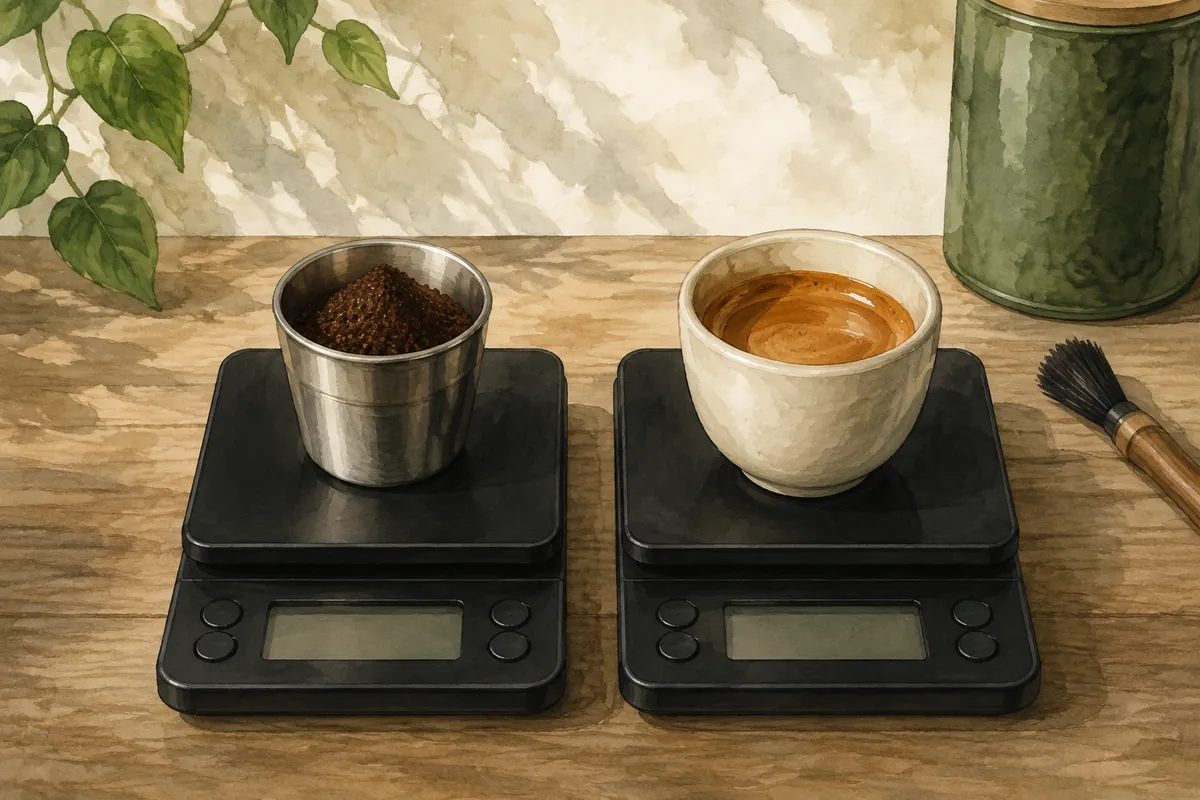
The examples below are arithmetic, not recommendations for your basket. Choose a dose suited to the basket first, following a consistent espresso dial-in process. You do not need to increase the dry coffee to 18 g just because a recipe example uses that number.
1:1.5
18 g in
27 g out
1:2
18 g in
36 g out
1:3
18 g in
54 g out
Illustrative weight comparison. Fill heights represent beverage weights, not physical volumes or crema.
| Dry dose | Ratio | Espresso yield |
|---|---|---|
| 16 g | 1:2 | 32 g |
| 18 g | 1:2 | 36 g |
| 18 g | 1:2.5 | 45 g |
| 20 g | 1:1.5 | 30 g |
Measure the espresso, not the size of the cup
Put an empty cup on the scale and tare it before brewing. Read the espresso’s weight, then add anything else after you have recorded it. If the cup holds 36 g of espresso plus milk, the total drink weight is not the yield to use in the espresso ratio.
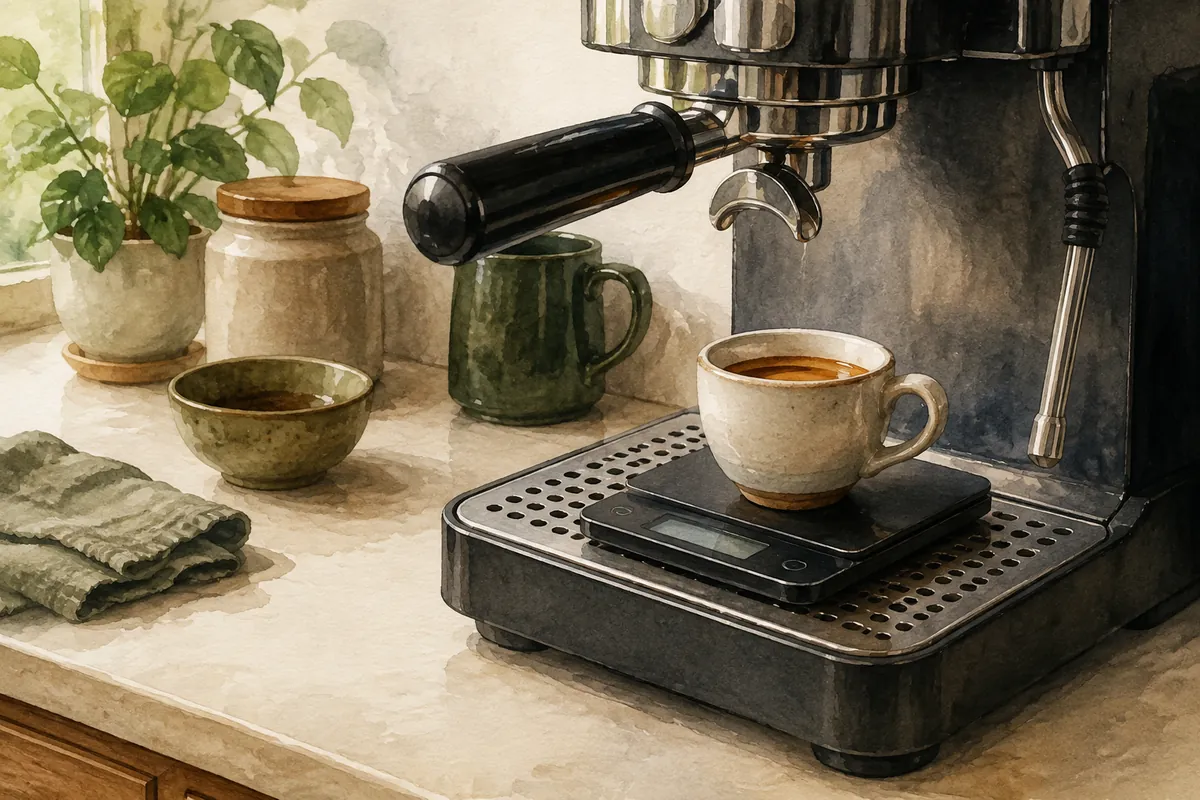
Choose a scale that fits securely under the cup and lets you read the display. Note the final weight after you stop the shot; this makes the record reflect what actually reached the cup. Avoid using a remembered button duration as a substitute for measuring the result.
Two cups, one total espresso yield
When a spouted portafilter divides a shot between two cups, the recipe’s beverage yield is the sum of both cups. An 18 g dose producing 18 g in each cup has a total yield of 36 g: still 1:2. Dividing the drink does not change the amount of dry coffee used for that extraction.
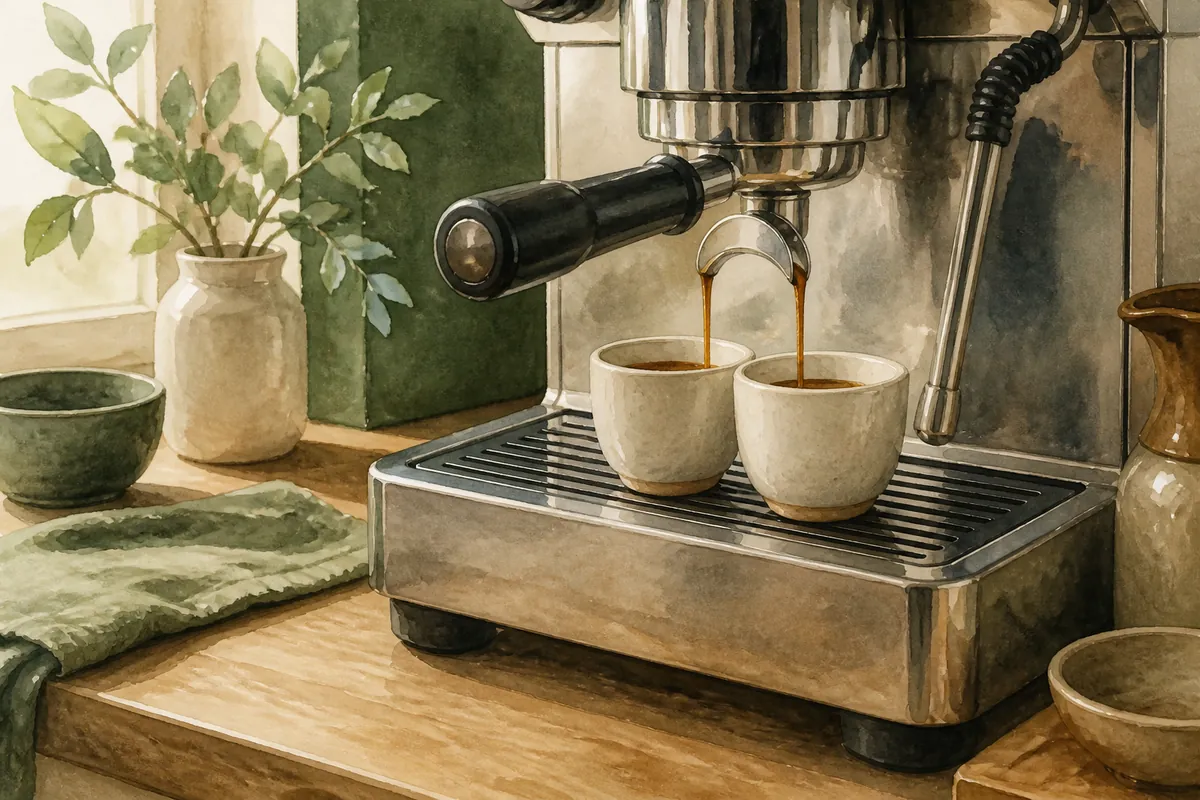
For a measurement exercise, tare each empty cup and record the espresso weight separately, then add the readings. If the cups hold 17 g and 19 g, the total is again 36 g. This example explains the arithmetic; it is not a claim that every spout divides a drink evenly.
Keep this distinction in your recipe notes when making two drinks for the household. Milk added to either cup is separate from espresso yield. If you need a different amount of espresso overall, choose a deliberate recipe change using the dose, grind and yield workflow, rather than silently doubling the basket dose.
| Measure | Example |
|---|---|
| Dry coffee in basket | 18 g |
| Cup A espresso / cup B espresso | 17 g / 19 g |
| Total espresso yield | 36 g |
| Brew ratio | 18:36 = 1:2 |
A longer yield changes more than drink size
At a fixed dose, a longer yield generally extracts more while making the drink less concentrated. If you are adjusting yield because the cup tastes sharp, start with our sour espresso troubleshooting guide. Extraction and strength are different: a shorter shot can be more concentrated without having extracted more from the grounds. Neither ‘stronger’ nor ‘longer’ automatically means better.
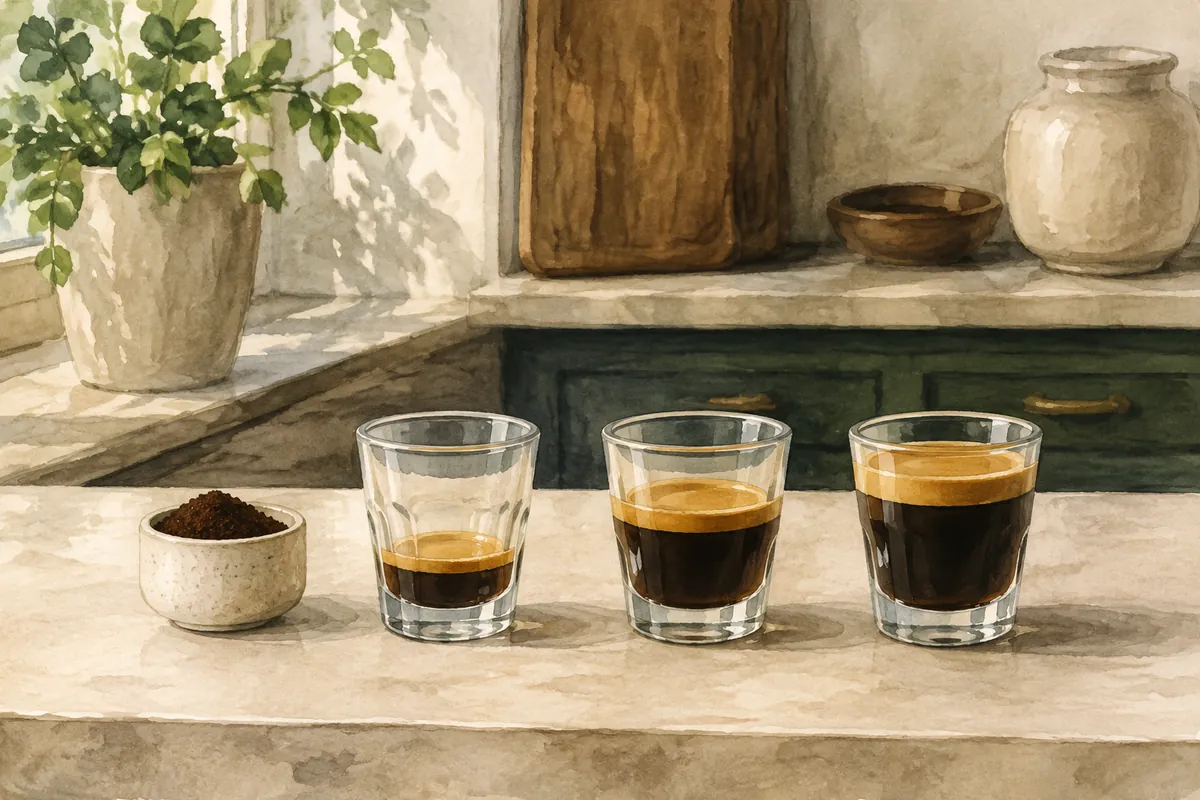
That tradeoff is why ratio is worth experimenting with. Keep the dose and grind steady and compare a small yield change. Decide whether the new cup has a balance and texture you prefer rather than assuming the larger number wins.
Try a simple two-shot comparison
Pick a baseline that suits your basket and beans. If your baseline uses 18 g in and 36 g out, an illustrative comparison is 18 g in and 40 g out. Write down the actual outputs and timing method. These are deliberately modest examples, not universal recipes.
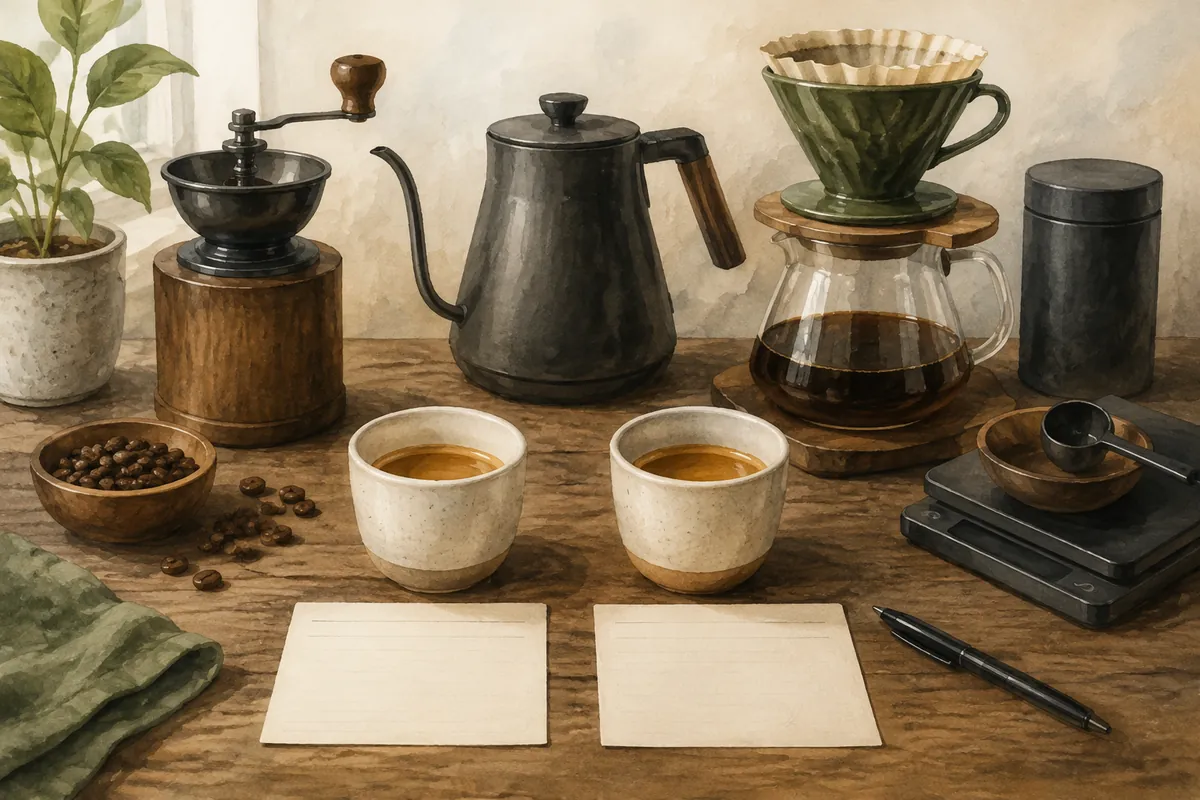
Taste both without milk first if that is comfortable for you, then assess the recipe in the drink you normally make. Describe the difference in your own words: more balanced, too thin, pleasantly bright, or less enjoyable. You do not need specialist tasting vocabulary to choose a preference.
Repeat the preferred recipe before saving it. If the shots differ wildly despite the same recorded dose and yield, ratio alone cannot explain the problem. Return to your preparation and grind routine, using our dial-in guide. A useful recipe needs both clear numbers and a result you can reproduce.
Compare 1:1.5, 1:2 and 1:3 at the same dose
Holding dose at 18 g makes the arithmetic easy to see: a 1:1.5 ratio gives 27 g out, 1:2 gives 36 g, and 1:3 gives 54 g. The second number is a multiplier of the dose, not a number of seconds or cups.
Names such as ristretto and lungo describe shorter and longer espresso styles, but a name alone is not a complete recipe. Write the actual dose and yield alongside it. That removes ambiguity when you compare your version with a roaster’s instructions.
| Recipe example | Dry coffee | Espresso out |
|---|---|---|
| Shorter: 1:1.5 | 18 g | 27 g |
| Baseline: 1:2 | 18 g | 36 g |
| Longer: 1:3 | 18 g | 54 g |
Brew ratio is not extraction yield
Brew ratio compares the input dose and beverage weight. Extraction yield is a different measurement: it describes how much of the dry coffee has been extracted. You cannot calculate it from the two weights alone; beverage concentration is also needed.
For home recipe notes, you do not need to measure extraction yield to make a useful comparison. Keep the two weights clear, record the preparation and describe the taste. Avoid labeling a 1:2 recipe ‘20% extraction’ or calling a longer shot automatically over-extracted.
Why adding water afterward does not make a lungo
Compare two hypothetical drinks: one brewed to 54 g through the coffee bed, and one brewed to 36 g with 18 g of water added afterward. Both contain 54 g of liquid, but the espresso recipes differ. The first has a 54 g espresso yield; the second has a 36 g espresso yield plus dilution.
Keep added water and milk in separate fields in your recipe log. This also helps when you find a shot that tastes balanced on its own but gets lost in your usual milk drink. You can then compare the finished drink recipe without quietly changing what ‘yield’ means.
Frequently asked questions
What does an 18 g in, 36 g out recipe mean?
It means 18 g of dry coffee in the basket and 36 g of brewed espresso in the cup: a 1:2 brew ratio. Cup weight, added water and milk are excluded.
Is 1:2 the best espresso ratio?
It is a useful starting example, not a universal optimum. Use the roaster’s recipe if supplied, then compare modest yield changes at a fixed dose and judge the result.
Does a double shot always weigh 36 g?
No. The phrase double shot does not specify a unique dose or yield. Record both weights to make the recipe clear.
Can I use milliliters instead of grams for espresso ratio?
The ratios in this guide compare weights, so use grams for both dry coffee and brewed espresso. A cup’s volume marking is a different measurement and includes space occupied by crema. Do not mix a volume reading with a weight-based recipe.
Do I count both cups when pulling a split double shot?
Yes. Add the espresso weight in both cups to calculate the yield of that extraction. For example, 18 g of dry coffee and two 18 g portions of espresso gives 36 g total yield, or 1:2.
Keep learning