Air fryers · 6 min read
Why Is My Air Fryer Food Not Crispy? Checks and Fixes [2026]
Why is your air fryer food not crispy or browned? Check basket loading, preparation, oil and cooking settings before deciding you need a different appliance.

By Marvin Smit
Published · Updated
On this page
Before comparing basket and oven-style air fryers, repeat a familiar food with a smaller, carefully prepared batch. Record the food, quantity, mode and settings so you can tell whether a change actually helped. This is a troubleshooting process, not a tested recipe or a universal cooking-time chart.
Research-based guidance; we do not claim hands-on testing. Hero artwork is AI-generated; section diagrams are conceptual illustrations. Our buying guides may contain affiliate links. Read our disclosure and research approach.
Match the symptom to the next check
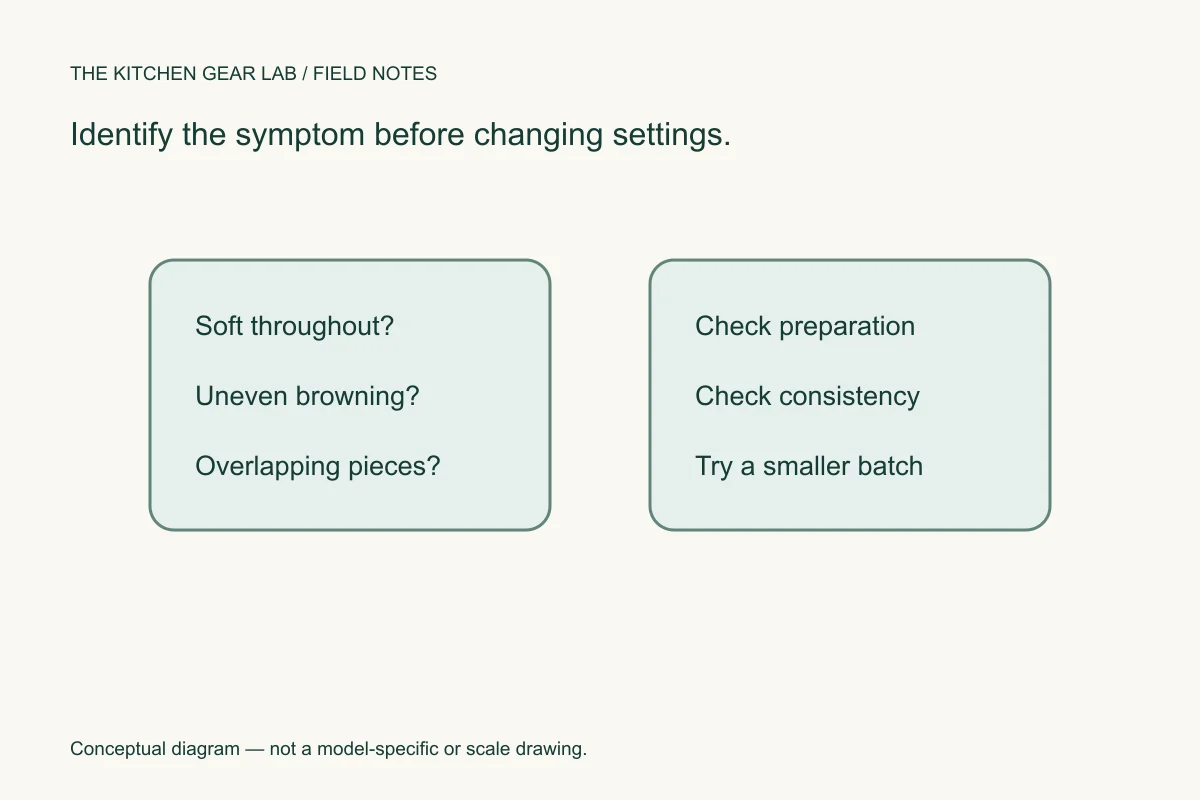
“Not crispy” can describe several different results. A uniformly soft coating is a different starting point from burnt tips and pale centers. Look at the whole batch before adding more cooking time.
For raw meat or poultry, texture and browning cannot confirm doneness. Use the appropriate food thermometer and safe-temperature guidance for the food. Do not use this crispness checklist as a substitute for a food-safety check.
| What you notice | Check first | Useful comparison |
|---|---|---|
| Pale food throughout | Correct cooking mode and food instructions | Repeat the recommended preparation |
| Some pieces brown; others stay soft | Overlapping pieces and batch size | Cook a smaller batch |
| Dry or dark tips; soft centers | Uneven piece sizes and preparation | Use evenly prepared pieces |
| A soft wet coating | Whether the recipe suits an air fryer | Use a recipe developed for the appliance |
Source: Philips: food is not crispy
Give food room in the basket
Food piled into a deep heap does not expose every piece in the same way. Philips advises spreading suitable snacks in a layer across the bottom of the basket. Follow your own appliance’s loading instructions rather than treating its maximum capacity as a promise of crisp results for every food.
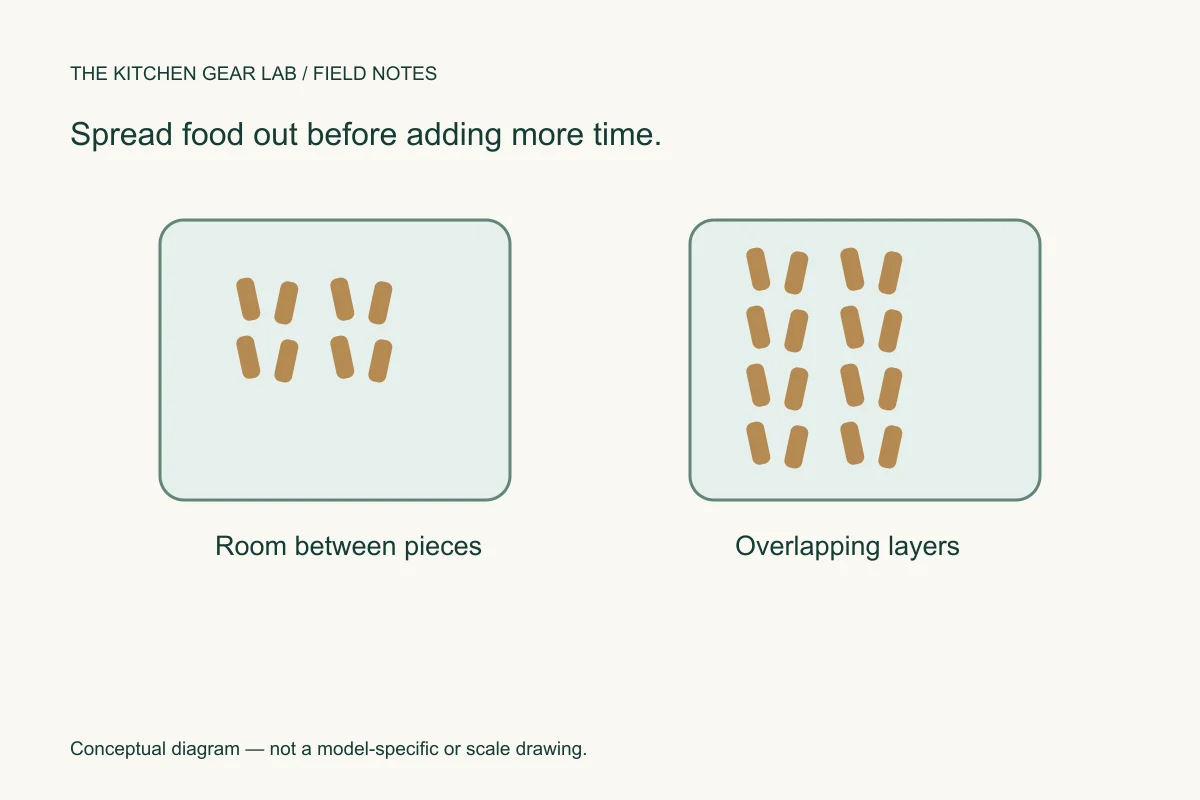
Keep the crisper plate or basket insert in the configuration specified by the manufacturer. Removing it just to make more room changes the cooking setup. If the food only fits when compressed or stacked tightly, dividing it into batches is a more informative first experiment.
For a simple comparison, keep the food and preparation the same but cook less at once. If that improves evenness, you have learned something about loading. You have not proved that your appliance is faulty.
Source: Philips: food is not crispy
Check moisture, coating and oil instructions
Fresh potatoes and a bag of prepared frozen fries are not the same starting material. The package may already specify an air-fryer method; use it. For fresh ingredients, follow an appropriate recipe’s drying and oil instructions before experimenting with the appliance settings.
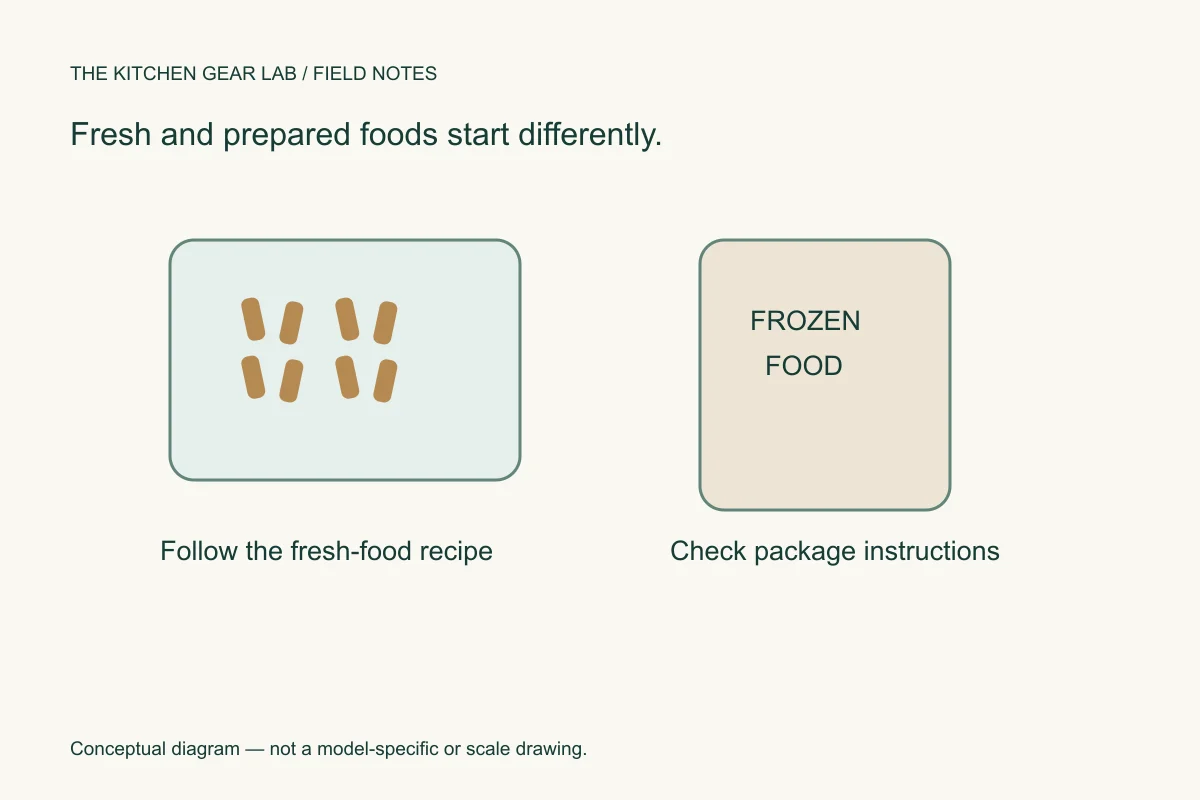
Philips recommends applying oil to appropriate fresh ingredients rather than pouring it into the appliance. That does not mean every frozen snack needs extra oil, or that adding more oil always produces a better result. Keep the amount tied to the recipe and food.
A dripping wet batter can behave differently from a coating that is already set. Do not assume a recipe designed for immersion in hot oil transfers unchanged to an air fryer. Choose an air-fryer-specific method and compare one change at a time.
Source: Philips: when to use oil
Confirm mode, temperature and preheating
Check the selected function, not only the number on the display. Reheat, dehydrate and air-fry programs may have different operating behavior. Follow the instructions for your exact model and food; a preset is a starting convenience, not a sensor that knows the thickness of every piece.
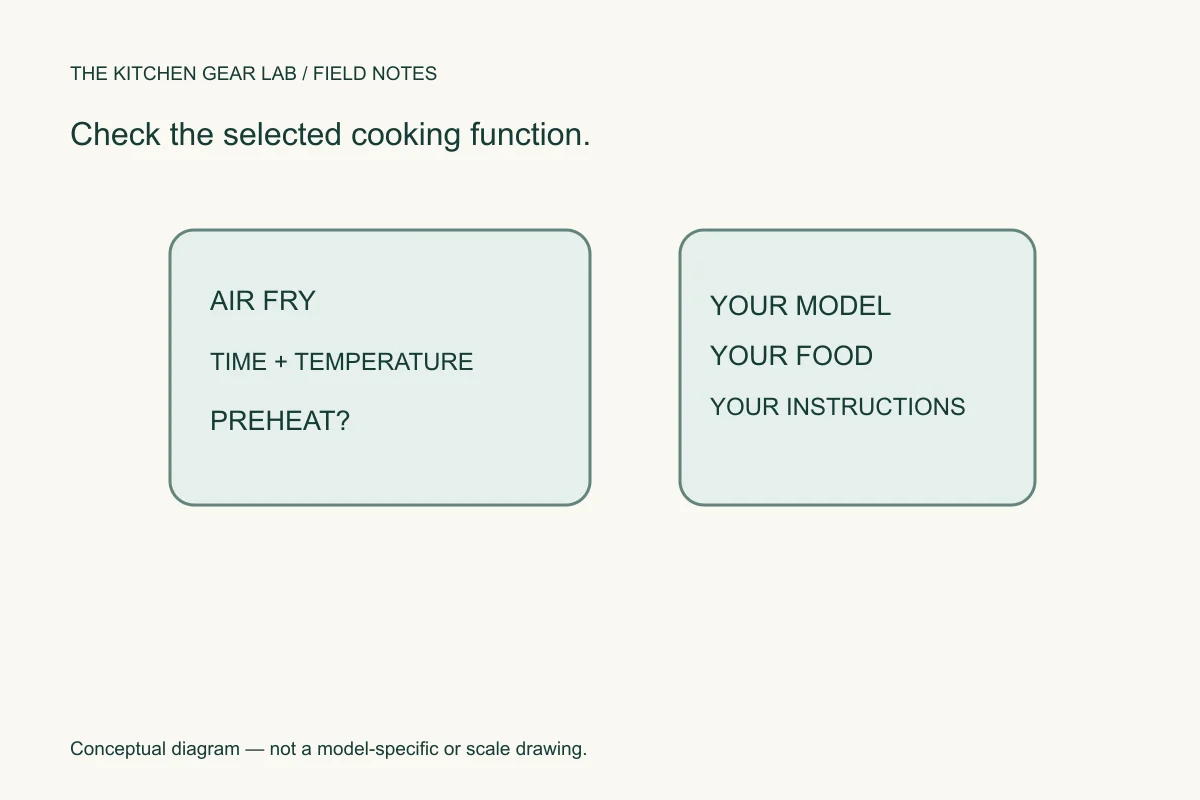
The Ninja AF101 guide includes a preheating recommendation, but that is not a universal rule for every air fryer. If the package and appliance instructions differ, consult the appliance guidance and the food producer’s method instead of copying settings from an unrelated machine.
Do not repeatedly raise the temperature because the surface is pale. If some pieces are already dark, more heat may deepen that unevenness. First check quantity, preparation and spacing, then make a modest documented adjustment.
Source: Ninja AF101 owner’s guide
Turn or shake when the instructions call for it
Some foods need redistribution during cooking. Use the handle and the manufacturer’s procedure; hot baskets and trays need an appropriate heat-resistant surface. Keep fingers and loose utensils away from hot internal parts.
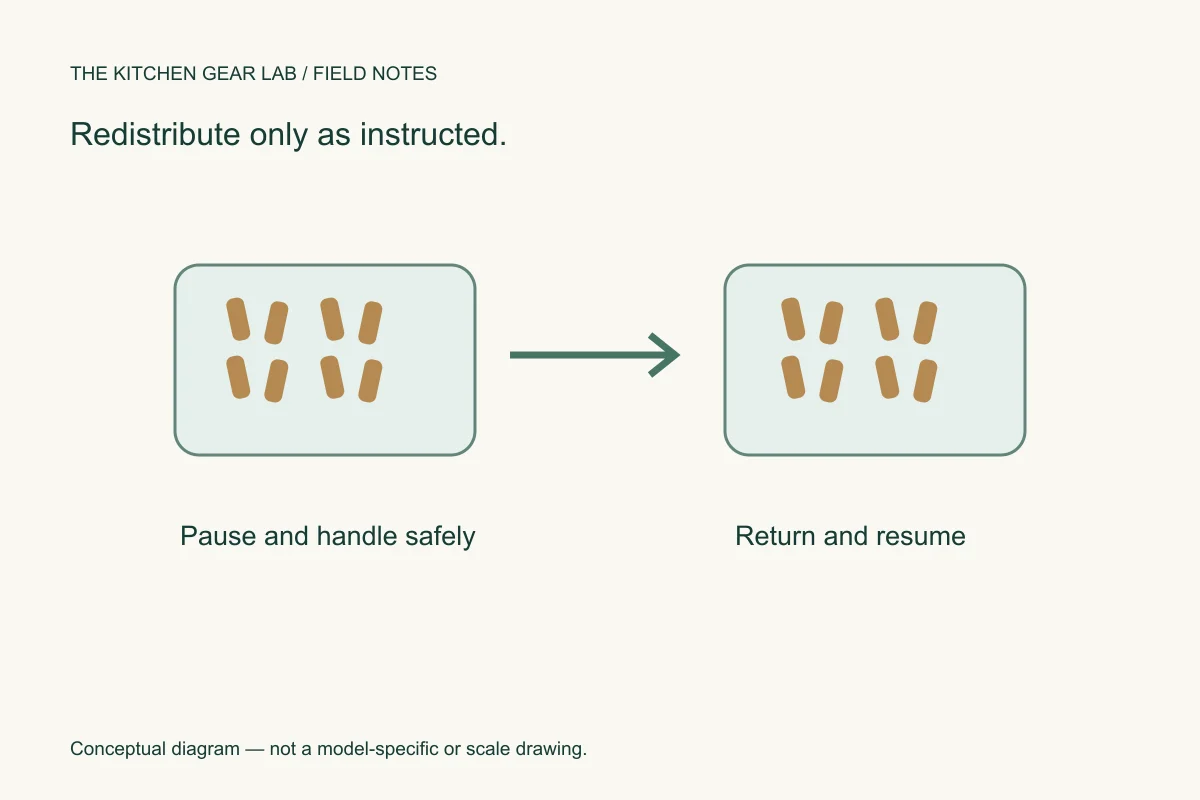
Shaking is not interchangeable with turning every food. Delicate coated items may need careful turning with a suitable utensil, while fries can often be redistributed in the basket. Follow the food’s recipe and your manual.
Set a reminder if the appliance does not provide one. After opening the drawer, check that it is fully returned and that the cooking cycle has resumed. Make a note of this step so the next batch is a useful comparison.
Source: Ninja AF101 owner’s guide
Separate technique problems from capacity limits
If a smaller batch improves the result but makes dinner inconvenient, capacity may be the practical limitation. Compare usable cooking surface and your ordinary portions in our small air fryer buying guide; advertised quarts alone cannot tell you how food will fit in a layer.
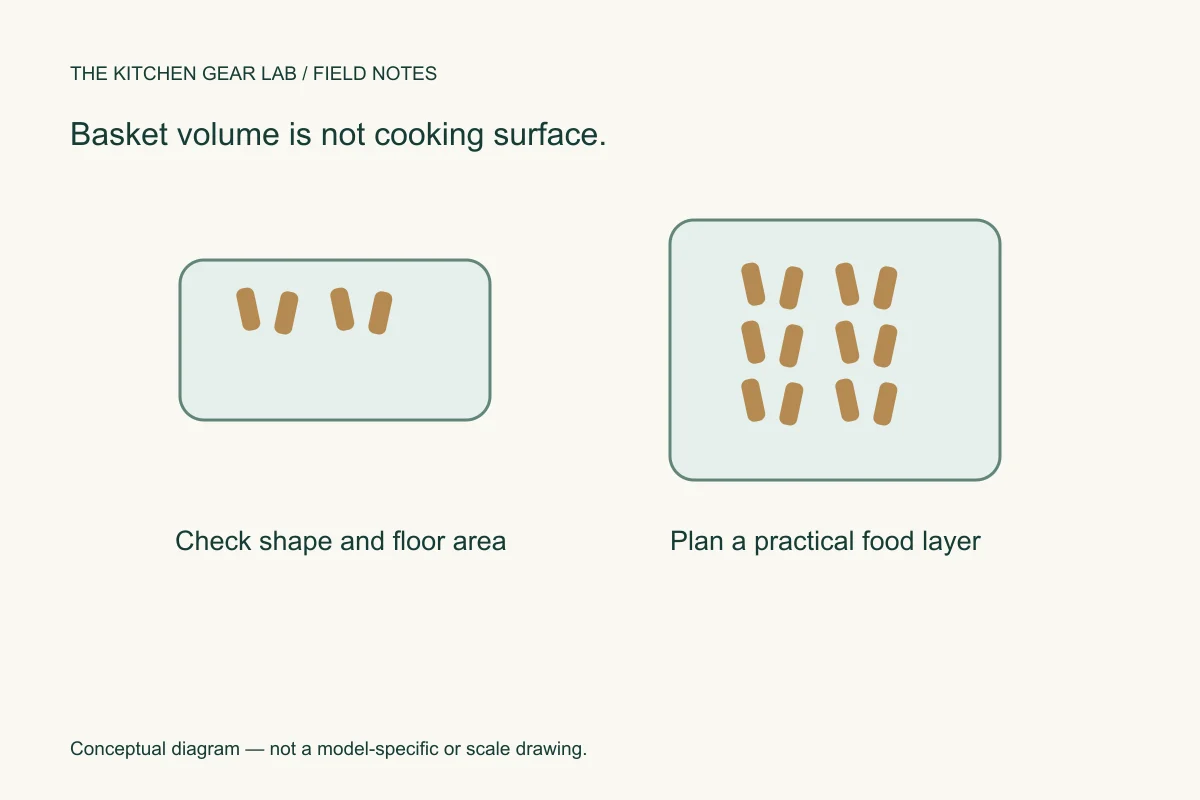
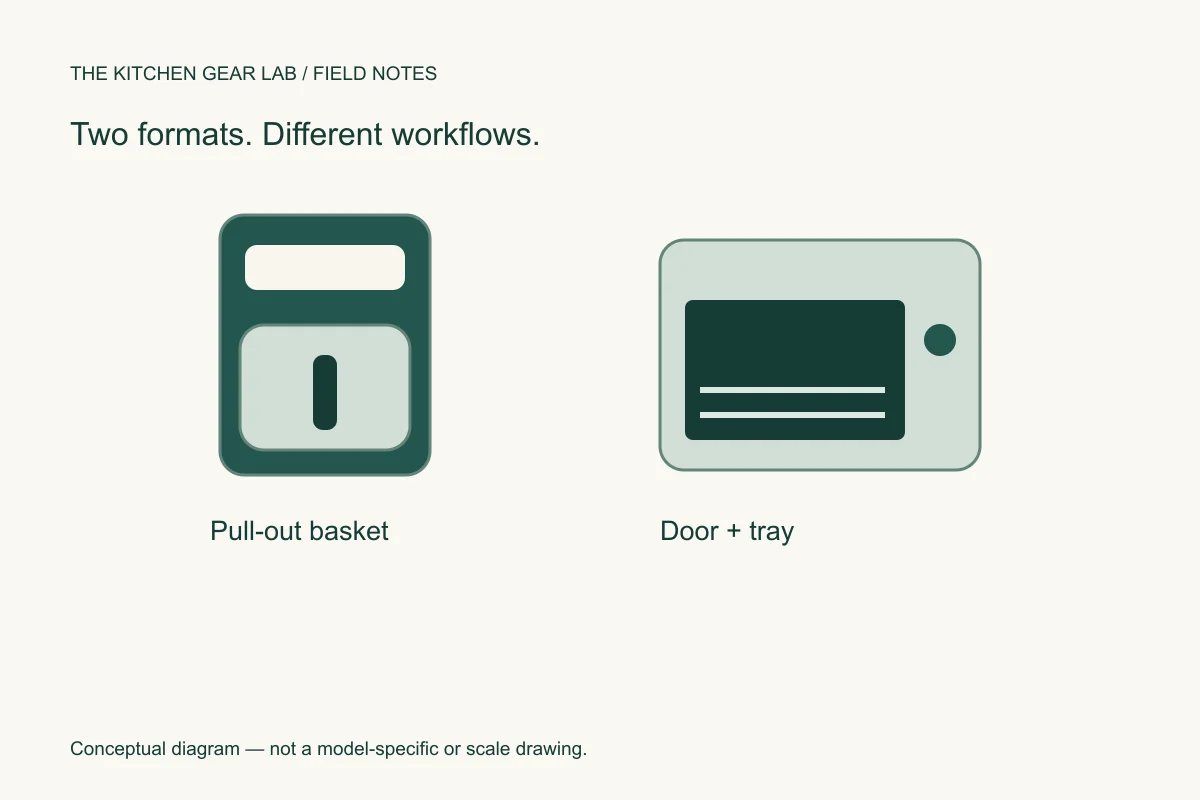
A wider oven-style tray may suit some meals, but a different format is not an automatic crispness fix. Our basket-versus-oven comparison explains why cooking area, air movement and everyday tasks need separate consideration.
Keep a short log: food and cut size, preparation, batch quantity, mode, settings and the result. Repeat the most useful change before adopting it. If the appliance no longer behaves as its manual describes, stop using a troubleshooting recipe as a workaround and contact manufacturer support.
Frequently asked questions
Why are some fries crisp and others soft?
Check overlapping pieces and uneven sizes before increasing the temperature. Repeat a smaller, evenly prepared batch using the food and appliance instructions.
Do frozen fries need extra oil?
Follow the package instructions. Prepared frozen fries and freshly cut potatoes are different starting points; do not assume both need the same amount of added oil.
Can I use a liner to make cleanup easier?
Use only accessories and placement permitted by your model’s manual. A liner changes the cooking setup, so check the instructions rather than adding one during a comparison of batch size.
Should I buy a bigger air fryer?
First confirm that a smaller batch solves the problem. If cooking repeated batches is the limitation, compare usable cooking surface and operating footprint rather than only advertised capacity.
Keep learning