
Wok care · 8 min read
How to Season a Wok: Stovetop and Oven Methods [2026]
Learn how to season a wok with thin oil layers on the stove or in the oven. Check pre-seasoned steel, oil choices, sticky patches and everyday care.

By Marvin Smit
Published · Updated
On this page
Start by checking whether your carbon steel wok is raw, blued or already oil-seasoned. Those labels do not all mean the same thing. If you still need to choose a wok, our wok buying guide covers the stove-fit decision. The steps below explain seasoning and care, without recommending a model.
Research-based guidance; we do not claim hands-on testing. Hero artwork is AI-generated; section diagrams are conceptual illustrations. Our buying guides may contain affiliate links. Read our disclosure and research approach.
Check whether your wok needs seasoning
Raw carbon steel needs oil seasoning before cooking. Bluing is a heat treatment that changes the steel’s surface; it is not the same as building a layer of oil seasoning. Serious Eats says pre-seasoned woks may have heat treatment and oil, or a blued surface.
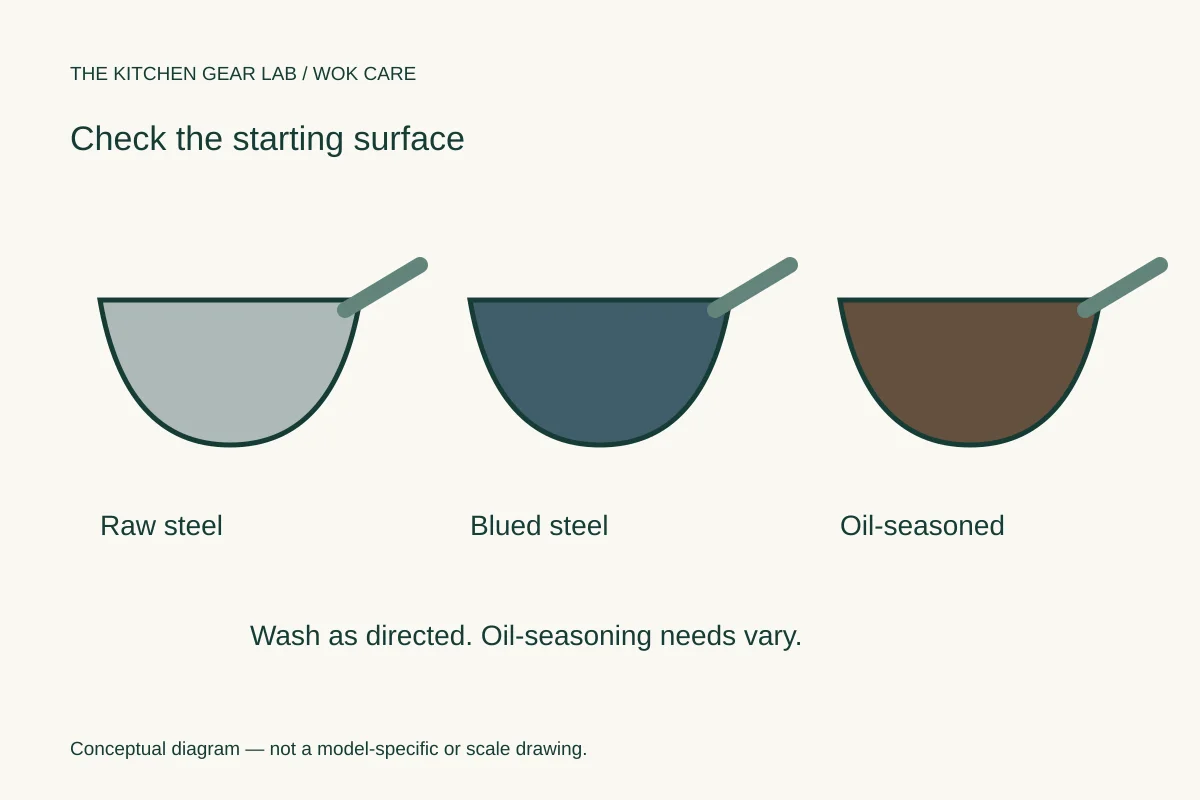
Pre-seasoned woks still have a factory film to wash off: Serious Eats noted this on pre-seasoned models. How much preparation comes next depends on the maker. [Yosukata’s FAQ](https://us.yosukata.com/pages/faq) says its blued woks still need oil seasoning. [Made In’s care guide](https://madeincookware.com/blogs/how-to-season-wok) says its oil-seasoned wok can skip the initial seasoning process.
For an oil-seasoned wok, follow its light cleaning instructions rather than stripping it back to bare steel. Made In calls for warm water, a soft sponge, prompt drying and low heat to remove remaining moisture.
| What you have | First step |
|---|---|
| Raw carbon steel | Remove the protective coating as directed, wash, dry and season. |
| Blued carbon steel | Wash off the factory film; check the maker’s oil-seasoning steps. |
| Oil-seasoned carbon steel | Wash as directed and dry fully; do not assume it needs stripping. |
Wash off the factory coating and dry right away
Factory coating removal comes before the oil layers. Start with your wok’s instructions. Serious Eats describes washing with hot, soapy water, but the scrubber choice varies by maker.
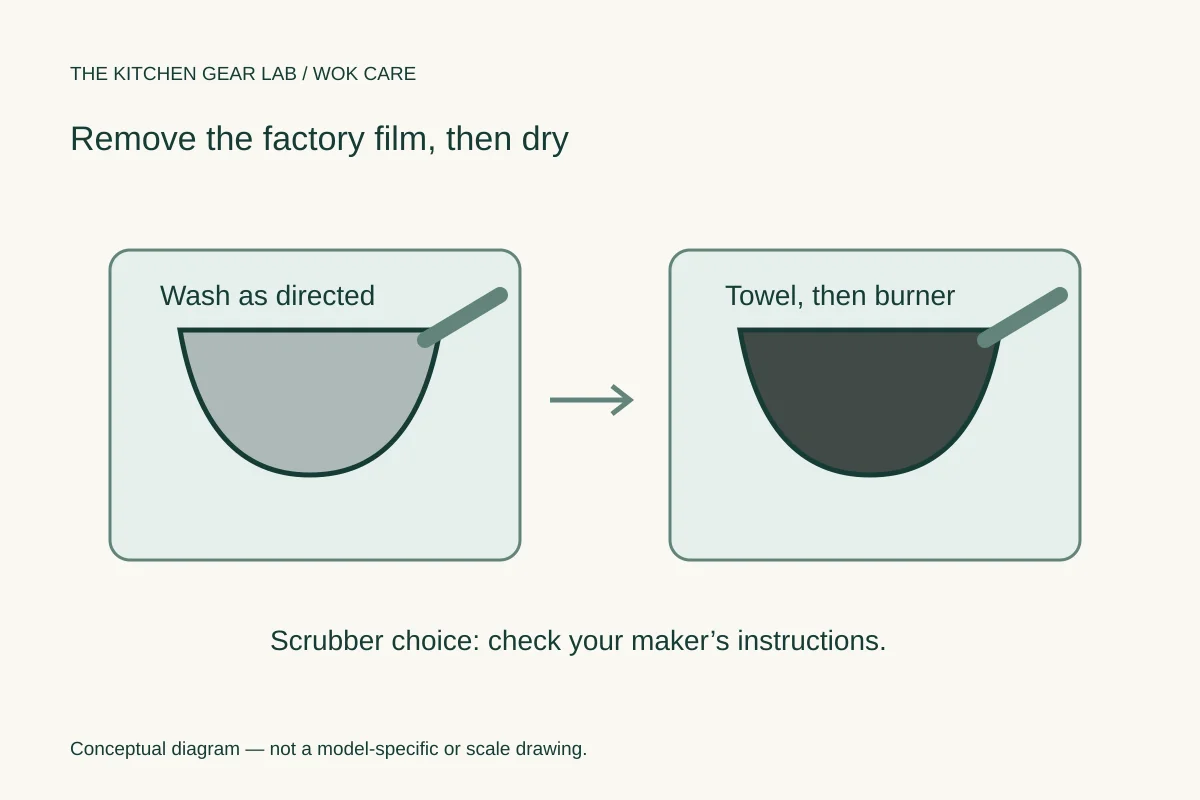
[Woklove’s first-use guide](https://www.woklove.com/seasoning-the-wok/) calls for steel wool. [Yosukata’s FAQ](https://us.yosukata.com/pages/faq) specifies a non-metal scouring pad and says not to scrub too hard. Do not apply one maker’s stripping method to a different wok without checking.
After washing, towel-dry the wok right away. Put it on the burner to drive off the remaining water, as Serious Eats directs. Bare, wet carbon steel can rust quickly; do not leave it to air-dry.
Season a wok on the stovetop
Open a window and turn on the exhaust fan before heating. The oil will smoke during seasoning. Stay with the wok throughout the process; Woklove explicitly says not to leave it unattended.
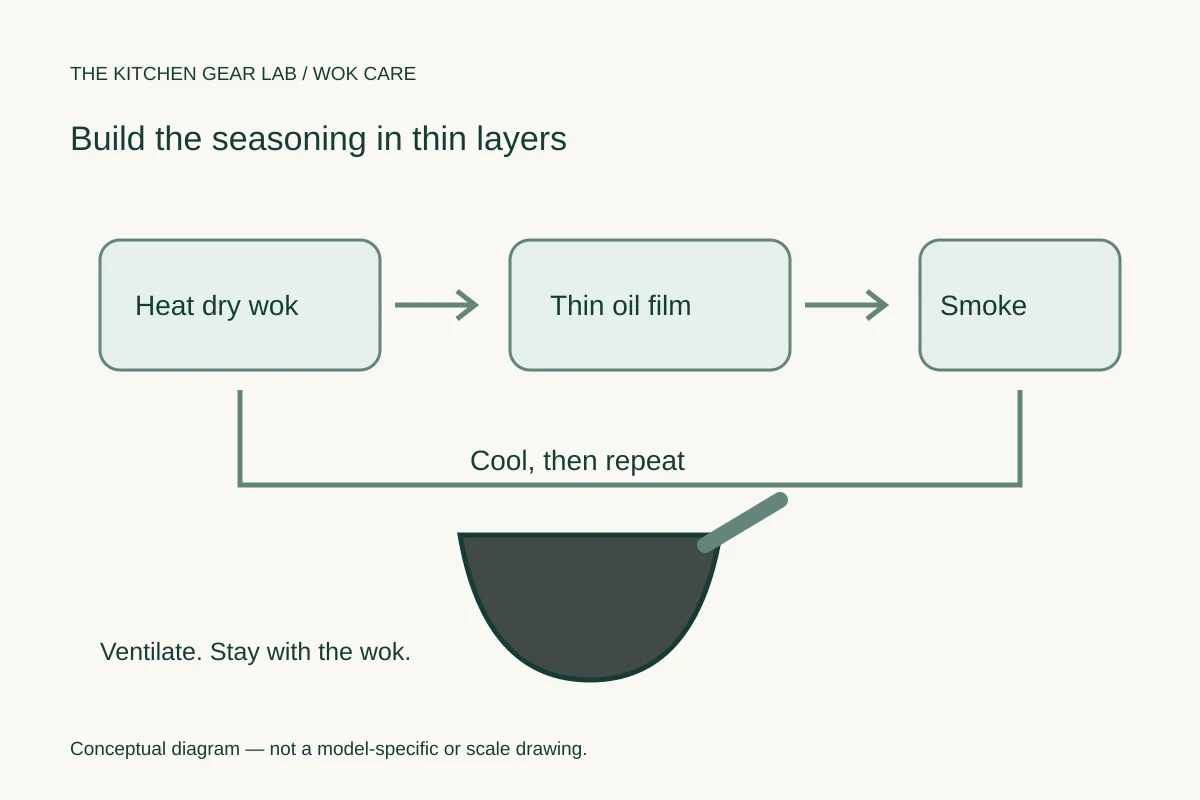
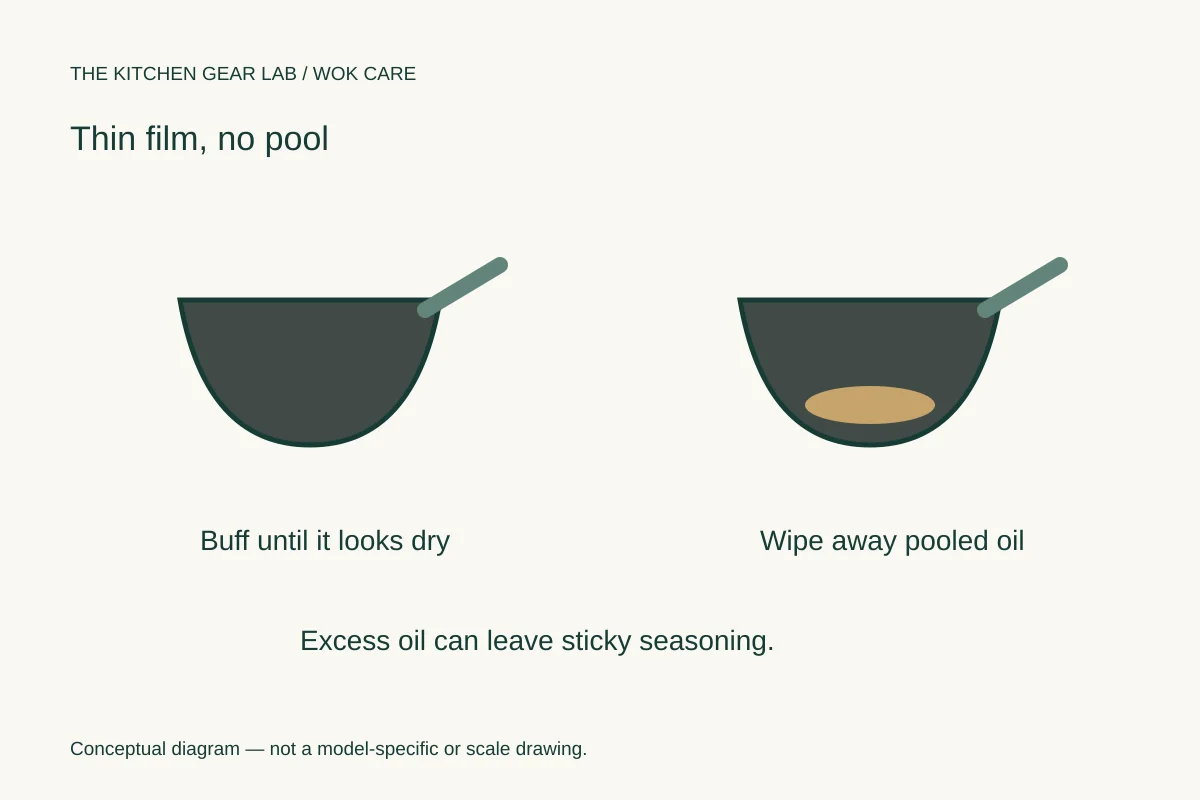
The key is a layer so thin that the wok looks dry after wiping. A shiny pool is too much oil. [Serious Eats’ wok guide](https://www.seriouseats.com/equipment-how-to-buy-a-wok-which-wok-is-the-best) describes using paper towel held in tongs to rub oil over the hot surface. Move and tilt the wok so the sides receive heat too.
Do not judge the first coat by whether it looks black. Serious Eats says to repeat until at least dark brown. [Woklove’s method](https://www.woklove.com/seasoning-the-wok/) describes about three rounds; Serious Eats used four rounds in its [published wok testing](https://www.seriouseats.com/best-woks-5218113). Those are source methods, not a fixed count for every wok.
- Ventilate, then heat the clean, dry wok according to its maker’s instructions.
- Apply a little canola, vegetable or grapeseed oil. Rub it over the surface and buff away the excess until it looks dry.
- Heat the oiled wok until it smokes and the seasoning turns brown. Move it so the sides heat as well as the bottom.
- Let it cool, wipe on another very thin coat and heat again. Repeat until at least dark brown, following the maker’s method.
Use the oven method for an oven-safe wok
For a flat electric or induction stove, consider the oven method. [Made In’s carbon steel guide](https://madeincookware.ca/blogs/news/how-to-season-carbon-steel-cookware) says these stoves may give better results with oven seasoning. This advice is about seasoning; it does not mean every wok fits every stove.
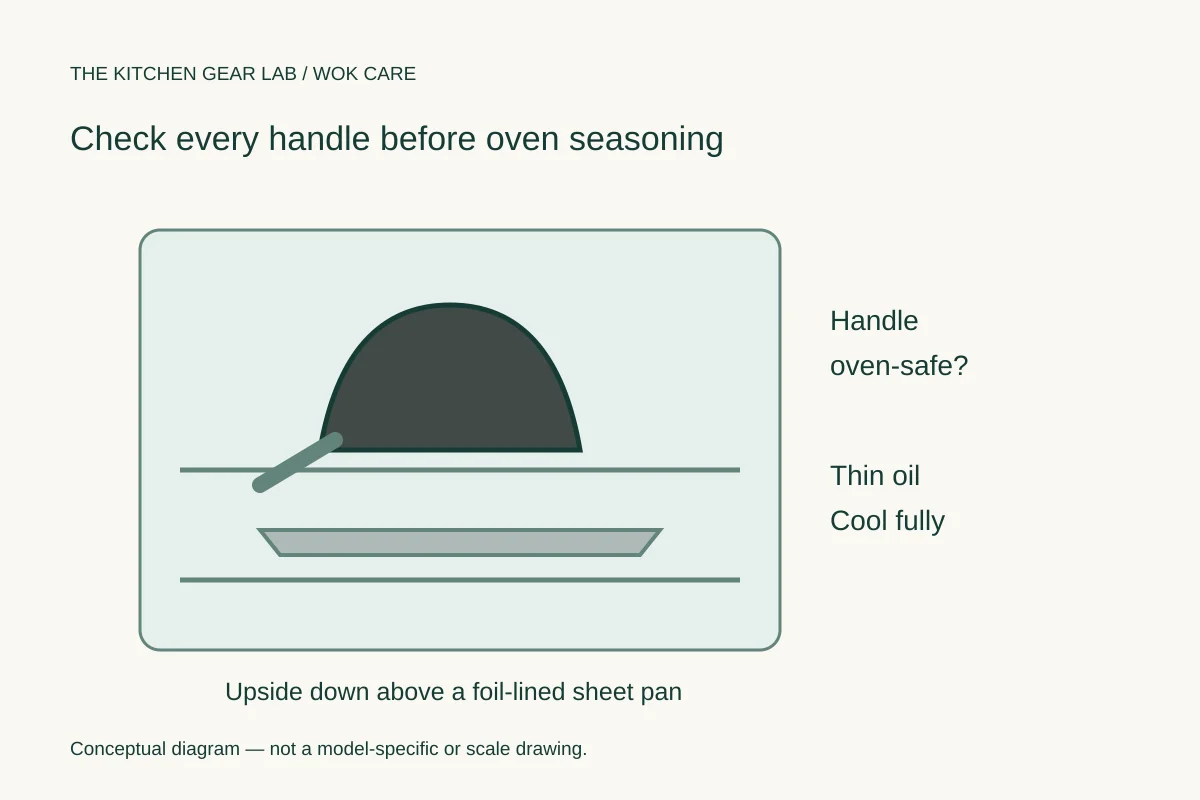
Check the handle first. Use the oven only if the handle is oven-safe at the chosen setting, or can be removed as the maker directs. Serious Eats notes that some wooden handles are hard to remove. Check all handles, not just the long one.
The sources differ on temperature and time. The table keeps each method separate; follow your wok’s manual before a general guide. [Serious Eats’ pan method](https://www.seriouseats.com/how-to-season-carbon-steel-pans) uses a different setting from its wok article. [Made In’s wok method](https://madeincookware.com/blogs/how-to-cook-with-a-wok) places the thinly oiled wok upside down above a foil-lined sheet pan, then turns off the oven and lets it cool fully.
| Oven settings by source | Temperature | Time and setup |
|---|---|---|
| Serious Eats: carbon steel pans | 450°F / 230°C | About 30 minutes per layer; repeat to dark brown. |
| Serious Eats: carbon steel woks | 500°F | 45 minutes; repeat a few times. |
| Made In: wok guide | Oil’s smoke point; 450°F for grapeseed in this guide | 1 hour, upside down above a foil-lined sheet pan; turn off and cool fully. |
Choose a neutral oil and wipe it thin
Canola, vegetable and grapeseed oil are the simple choices listed by Serious Eats for seasoning carbon steel. Use a thin film, not a cooking-sized pool. Its pan guide advises against butter, olive oil, lard and shortening for this method.
Flaxseed advice is mixed. Serious Eats’ pan guide says it is more prone to flaking. Its [wok care guide](https://www.seriouseats.com/equipment-how-to-buy-a-wok-which-wok-is-the-best) lists it as acceptable, and [Made In’s reseasoning guide](https://madeincookware.com/blogs/how-to-season-wok) lists it too. Canola, vegetable or grapeseed avoids that disagreement without adding another step.
Read the color, sticky spots and peeling
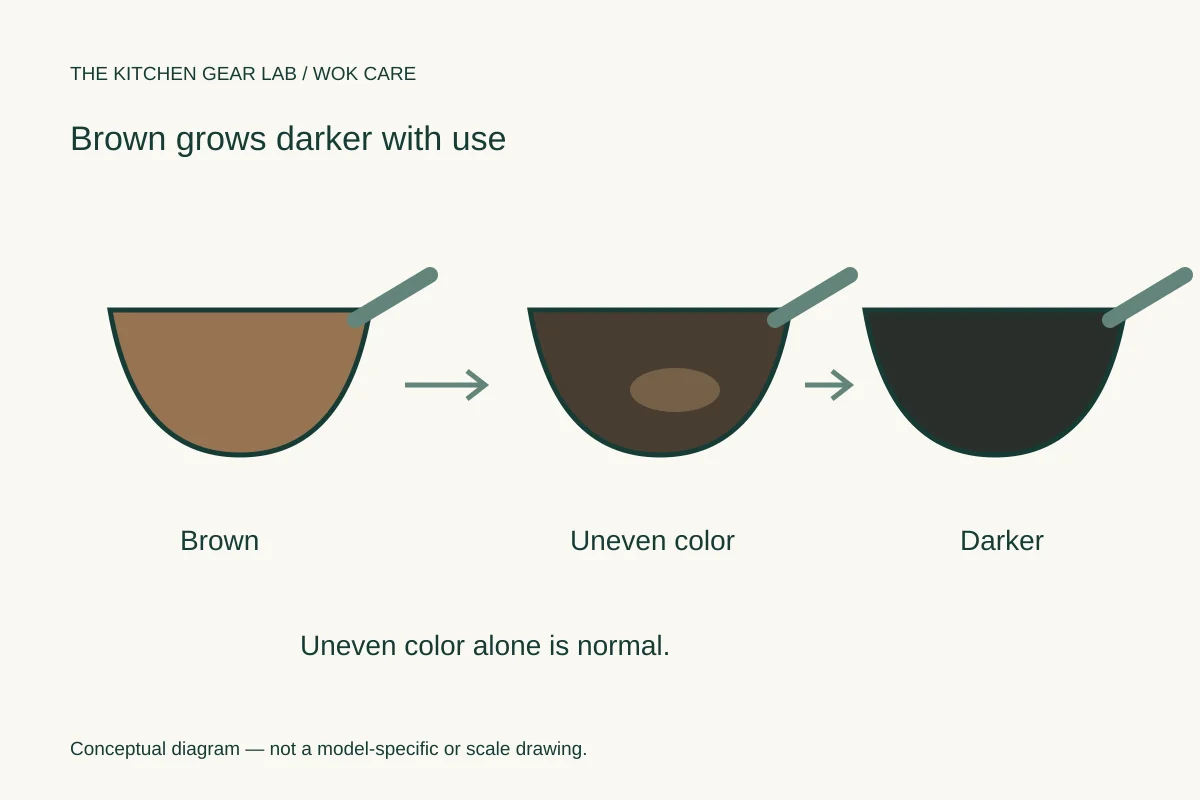
New seasoning starts brown and grows darker with use. [Serious Eats’ wok guide](https://www.seriouseats.com/equipment-how-to-buy-a-wok-which-wok-is-the-best) describes a change from silver to brownish to deep black. Uneven color alone is normal: [Yosukata’s FAQ](https://us.yosukata.com/pages/faq) notes uneven color after heat treatment, and [Woklove’s guide](https://www.woklove.com/seasoning-the-wok/) describes blotchy seasoning.
A sticky coating after seasoning can mean too much oil. Both Serious Eats and [Made In’s stovetop method](https://madeincookware.com/blogs/how-to-cook-with-a-wok) warn about this. Wipe away excess oil, leave a much thinner film and heat again using the seasoning method. Do not add a thick coat to hide a sticky patch.
If the seasoning is peeling or flaking, rebuild the worn area with thin oil layers. Serious Eats warns that flaxseed seasoning can flake more easily. [Made In’s care guide](https://madeincookware.com/blogs/how-to-season-wok) calls for reseasoning when patches feel sticky or food starts sticking more than usual. A patchy color and a peeling layer are different problems.
Keep the seasoning after cooking
Let the wok cool, rinse it and use a soft sponge to remove food. Dry it immediately with a towel, then over low heat. Wipe on a thin layer of oil before storage. [Made In’s maintenance guide](https://madeincookware.com/blogs/how-to-season-wok) describes this routine; Serious Eats says to wipe until no shine remains.
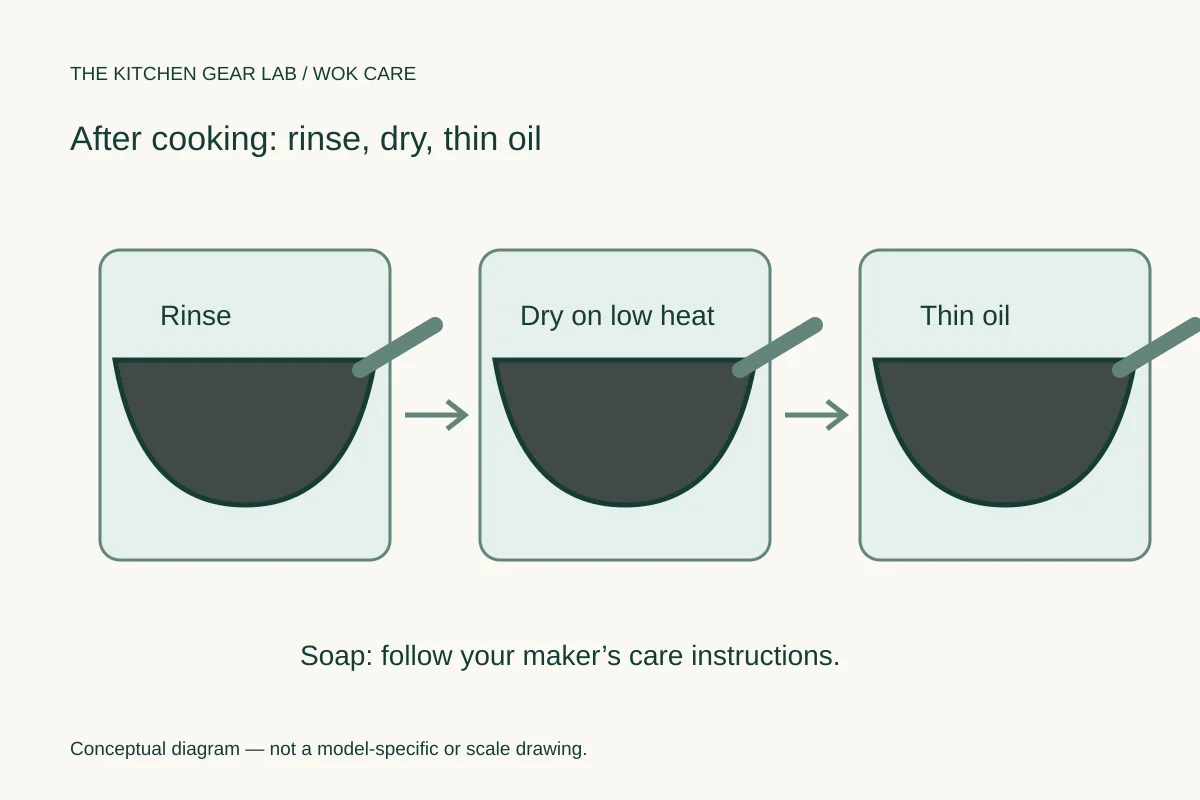
Check your maker’s care instructions for soap. Serious Eats uses dish soap on seasoned woks, while [Yosukata](https://us.yosukata.com/pages/faq) and [Woklove](https://www.woklove.com/seasoning-the-wok/) advise against detergent. The hot, soapy first wash that removes a shipping film is a different task from everyday cleaning. Do not put the wok in the dishwasher or leave it soaking.
For rust, scrub off the rusty area and season it again, following [Yosukata’s rust instructions](https://us.yosukata.com/pages/faq) or your own maker’s directions. If food sticks more or patches feel sticky, clean, dry and reseason. Keep our cooking guides handy for other kitchen questions, or browse the buying guide index when you have a separate equipment decision.
Frequently asked questions
Do you need to season a pre-seasoned wok?
Check what the maker means by pre-seasoned. A blued wok may still need oil seasoning, while an oil-seasoned one may be ready after washing and drying. Remove the shipping film as directed.
Can you season a wok on an induction or electric stove?
The oven is an option if every handle is oven-safe or removable as directed. Made In says electric and induction users may have more success with oven seasoning than the stovetop method.
How many times should you season a new wok?
There is no shared count across these sources. Woklove describes about three rounds, and Serious Eats used four in its wok tests. Its pan guide uses dark brown as the stopping point.
What is the best oil to season a wok?
Canola, vegetable or grapeseed fits the Serious Eats pan method. Apply very little and wipe off the excess. Sources disagree on flaxseed, so it is not the clearest starting choice.
How do you reseason a carbon steel wok?
Clean it and dry it fully first. Made In directs you to add an almost invisible oil film, heat from medium-high to high, wipe away beads, let it smoke for a few minutes and cool completely. Stay with it while heating.
Keep learning